







Launderers turn to the Euro, and an Arctic tax haven?

It’s an accepted truth in much of the English-speaking world that the European Union is sclerotic, sluggish and weighed down by bureaucracy. Now that may or may not be true in the formal economy, but in the criminal world, a key statistic has indeed suggested that for several years European crooks have been falling behind.
The value of banknotes in circulation is a useful proxy for the size of the illicit economy, because they are used less than ever by ordinary people in ordinary transactions. So a primary source of demand for physical cash comes from criminals and money launderers. Since 2022, however, while the value of all the physical US dollars, Australian dollars, and pounds has been rising, the value of Euro banknotes in circulation has stagnated.

Subscribe to our Coda Currents newsletter
Insights from the Coda newsroom on the global forces that shape local crises.
This is especially notable because, in the giant €200 bill, the European Central Bank provides a super-convenient banknote for transporting large values around in a relatively small box.
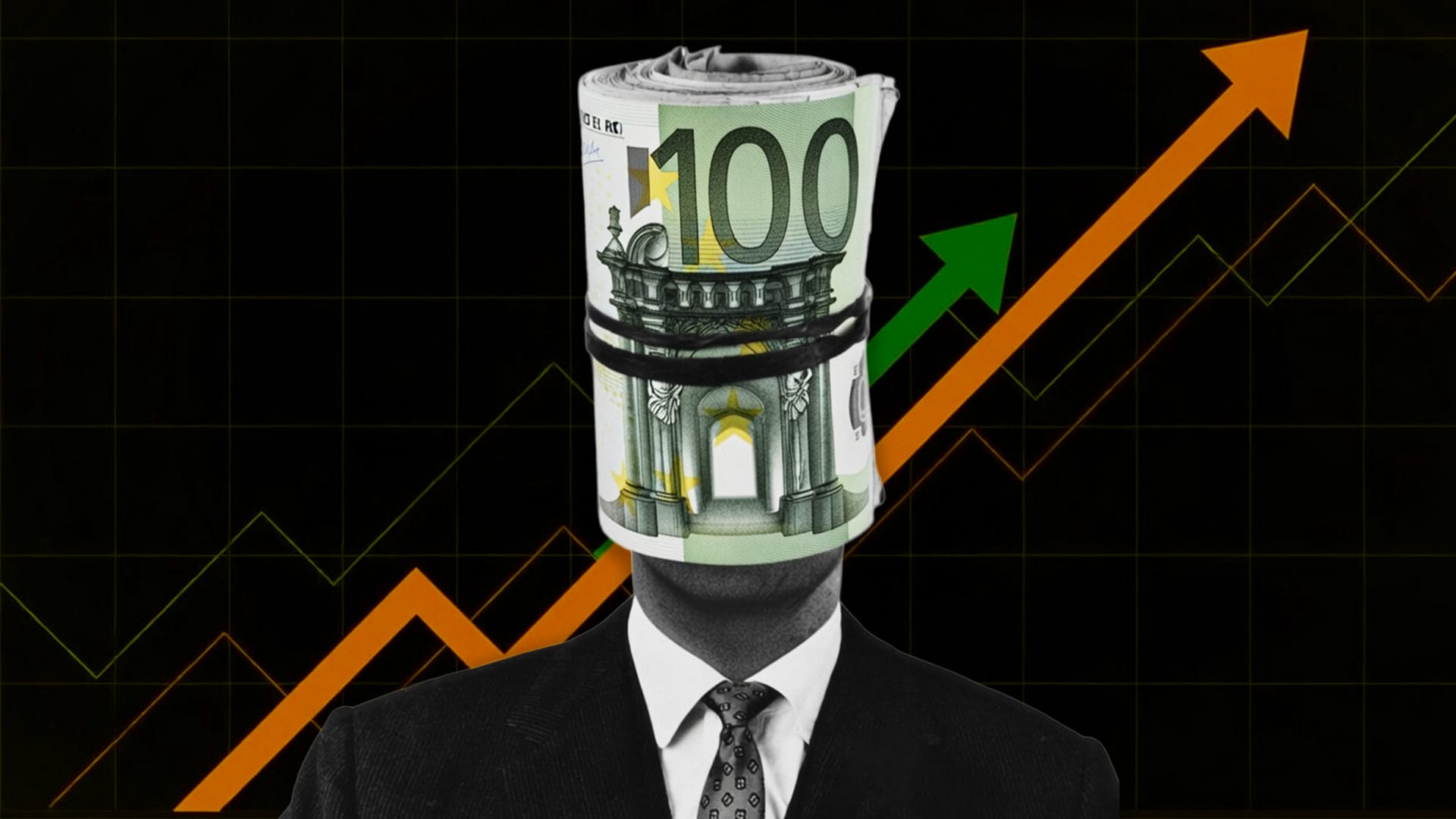
But it’s happy days for those looking for the green shoots of a revival in European criminal dynamism. In December, the value of Euro banknotes in circulation finally hit its first new all-time high — of €1.619 trillion — since June 2022, when it was €17 billion lower. Interestingly, however, the share of €200 bills in that total is falling. Consumers appear to prefer €100 bills and, if there are any money launderers out there able to explain why that is, please get in touch.
The Geenland gyp
I’m not going to express an opinion on the embarrassing idiocy of Donald Trump’s “policy” on Greenland, but I am interested in what the world’s biggest island would look like as the 51st state (as proposed in this bill from the improbably-named Congressman Randy Fine) from a financial crime perspective.
Greenland may be larger than Alaska, but it is the world’s least-densely populated territory, with only 57,000 inhabitants. That’s about the same number as people in Carson City, Nevada where there’s so little going on that it’s almost a relief to escape to the comparatively vast Reno, which isn’t something I’d otherwise imagine myself saying about such a barren wasteland. Greenland has a tenth of the population of Wyoming, the current least-populous US state, which might give you a clue about why I’m concerned should Greenland be accepted into the warm embrace of the USA. In recent decades, many of America’s least-populous states have enthusiastically embraced financial secrecy as a useful source of additional income, in that it allows them to swipe business/tax revenue from their larger fellows.
South Dakota and Delaware are the most famous examples, but Wyoming, Nevada, Alaska, Oregon and others are involved too. It is famously easier to get a shell company up and running than a library card in many states, and those companies help their anonymous owners evade tax, launder money, hide stolen wealth, and more.
One of the reasons for this phenomenon is that it’s just so much easier for lobbyists to get pieces of enabling legislation passed through the legislatures of small states, which have fewer competing industries and smaller numbers of lawyers. Now, if that’s the case in Wyoming, just imagine what it would be like in Greenland – laws could be rushed through in minutes, rather than hours. There’s no tax revenue to speak of, so why bother having any taxes at all? It would be a criminality haven for the ages.
It would, I admit, be quite amusing to watch the fury of Republican-voting states as they lost all this lucrative business to somewhere whose accession to the Union they had so enthusiastically endorsed. There would also be a tremendous irony in the extent to which shady Chinese and Russian money could pour through a secrecy haven even murkier than Delaware, considering the stated justification for the mooted annexation. But, more broadly, this would be absolutely awful for democratic accountability and other good things, so let’s hope it never happens.
Tether rides in with the cavalry
Tether, issuer of the world’s largest stablecoin USDT, has frozen $182 million worth of crypto that it thinks is linked to Venezuelan sanctions evasion. In this, it repeats a pattern familiar from its playbook of jumping aggressively to enforce Western governments’ rules just as soon as it has absolutely no choice about it.
The fact that Caracas was relying on USDT to fund most of its oil trade was common knowledge, helping both to support a corrupt and dictatorial regime and to ensure a healthy source of demand for Tether’s signature product for years. The same was previously true of Garantex, a Russian crypto exchange much used by criminals and sanctions evaders, which continued to shift large amounts of USDT for two years after it was designated by US authorities. When Garantex was finally shut down in a laborious joint operation by Finnish, German and US authorities, Tether rushed into belated action, freezing $23 million. Similarly, it hurried to assist US authorities only after Trump had sent in special forces to kidnap the Venezuelan president, thus keeping the money flowing till the bitter end.
It shouldn’t be necessary to say it, but this isn’t supposed to be how anti-money laundering works. The whole point of global standards is that companies report their suspicions to the authorities and freeze accounts while those suspicions are investigated, so that assets can be confiscated if shown to be of criminal origin.
With Tether, however, it appears to be the other way round, that is keeping silent for as long as possible until the authorities compel them to act, which may help explain why USDT is proving to be so very popular. After all, who wouldn’t want a version of the dollar without any of the downsides?
Related Articles

Tether insists that it does cooperate with law enforcement agencies, and recently announced a partnership with the United Nations Office for Drugs and Crime. “Supporting victims of human trafficking and helping prevent exploitation requires coordinated action across sectors,” said Paolo Ardoino, CEO of Tether, in a recent joint statement with the UN agency. There is a grim irony to this, considering that USDT remains the currency of choice for the horrific scam farms of Southeast Asia, where huge numbers of trafficked people are abused if they fail to meet their fraud targets.
“Aside from [the messaging app] Telegram, the cryptocurrency Tether also plays a key role in scam markets — the popular “stablecoin” is the preferred tool for all of the markets’ money-laundering transactions,” noted this analysis from Wired. “Tether and Telegram’s efforts to combat the ballooning scam industry’s use of their tools is comparable to Southeast Asian law enforcement’s minimal, often performative shows of raiding scam compounds, only to allow them to rebuild and resume operation.” Or indeed Tether’s performative rush to freeze Venezuelan crypto holdings.
A version of this story was published in this week’s Oligarchy newsletter. Sign up here.