







The new boss? Not the same as the old boss

In the good old days, all a money launderer had to do was take a bag full of cash into a bank, hand it over, and walk out with a cashier’s cheque. Annoying rules and regulations have long made that kind of thing difficult/laborious, but fortunately for launderers they now have crypto-for-cash brokers who do the same job.

Subscribe to our Coda Currents newsletter
Insights from the Coda newsroom on the global forces that shape local crises.
We’ve seen the same pattern all over the world — a criminal hands cash to a middleman, and receives cryptocurrency in exchange — but rarely has it been so well explained as in this affidavit attached to the indictment of Jorge Figueira, a 59-year-old Venezuelan charged this month with laundering more than a billion dollars.
In some ways, this was a very old-fashioned scheme, with funds derived from the South American drugs trade being shuttled between as many as seven different accounts to confuse any pursuers before being transferred to their recipients. Were it not for the crypto element, this could have happened at any time since the 1980s, but it is the crypto element I want to focus on: and, once again, it was Tether’s USDT.
“Basically, it is used for what we are doing,” said Figuera in a tapped phone conversation transcribed in the affidavit. “It is used to transfer money in a quick way, even to make it get to jurisdictions that have some type of issues, etc. For example, to send it to China… Let me be clear with you, (USDT) is used a lot for laundering money.”
The USDT was transferred specifically on the Tron blockchain which, said FBI Special Agent Stephen Walker, “is commonly used by individuals involved in money laundering.” You may be rolling your eyes that I’m talking about Tether yet again. And while a day may come, to egregiously misquote Aragorn, Son of Arathorn, when I don’t bang on about USDT, it is not this day. Because there is an important point to make here.
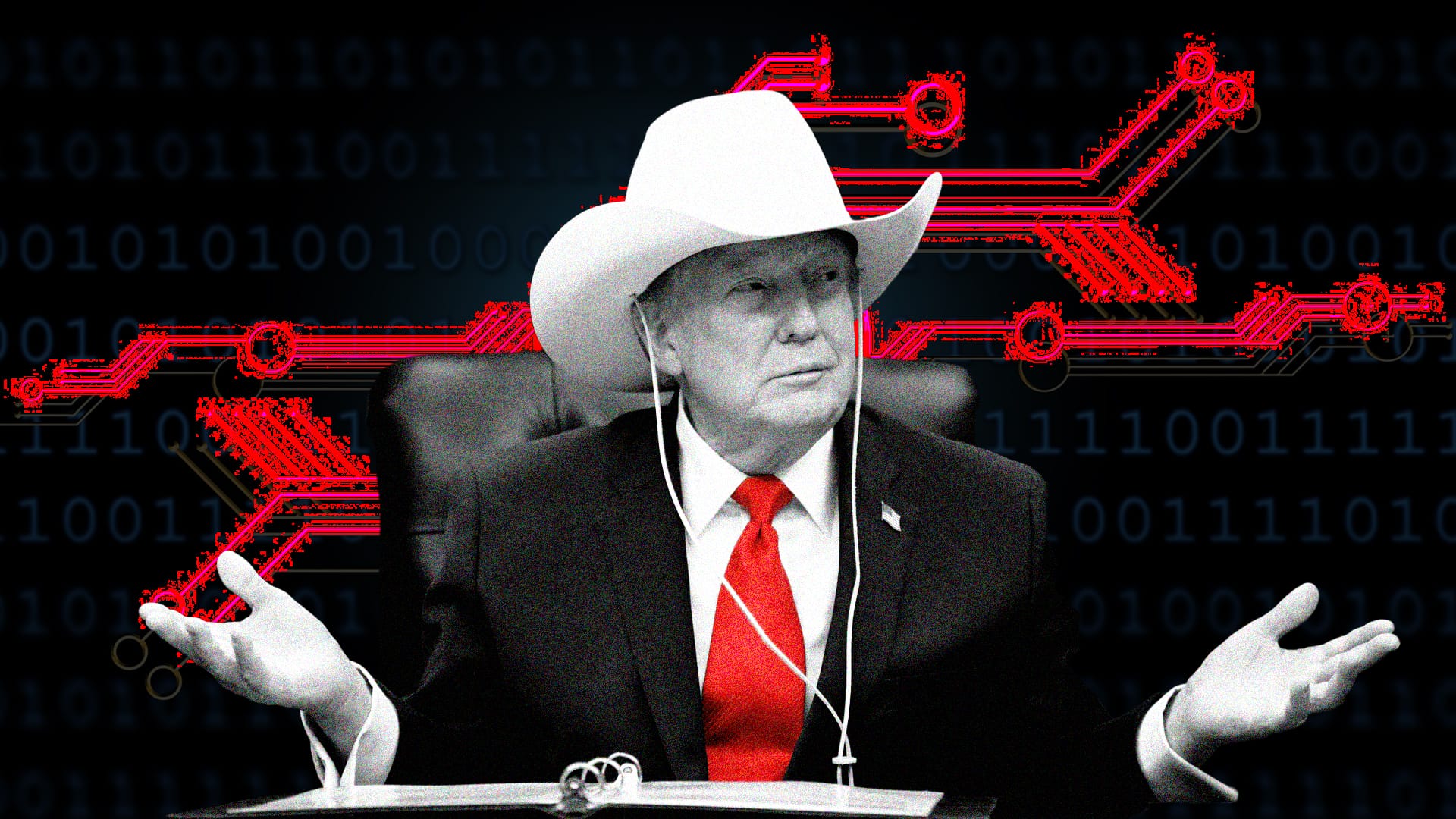
Last week, Commerce Secretary Howard Lutnick went to Davos as part of a strong U.S. team that wasted no time in expressing its contempt for everyone else in Europe, if not the world. “With President Trump, capitalism has a new sheriff in town,” Lutnick wrote in the Financial Times. (Question to American readers: is this kind of clichéd Wild West tosh as jarring to your ears as it is to mine when a UK politician does that whole “my dear chap” posho act?)
On the face of it, the indictment of Jorge Figueira does indeed look like the stereotypical muscular American sheriff in action again, ropin’ up the bad hombres and bringin’ ‘em into town tied to his saddle. America has after all historically been very good at prosecuting financial criminals. But this new sheriff operates in new ways.
It was Lutnick’s company Cantor Fitzgerald — overseen since last February by his sons Kyle and Brandon — that provided Tether with the services it needed to operate, which back in 2023 no other major institution would provide. With Tether valued at perhaps $500 billion thanks to the healthy demand for its products from people like Figueira, Cantor’s own windfall from it could total $25 billion, enough to vault members of Lutnick’s family into the stratospheric wealth club.
The owner of the Tron blockchain meanwhile — our old friend Justin Sun, consumer of a $6.2 million banana, generous investor in the Pitcairn islands, and so on — has been a substantial investor in the Trump family’s World Liberty Financial, although the relationship has not been entirely smooth.
I have no personal experience of the American Old West, but I’ve watched a lot of Westerns, and traditionally a good sheriff’s family members do not profit mightily from companies named in the indictments that the sheriff brings, nor from those that help the sheriff’s strategic enemies build a whole new system outside of the sheriff’s jurisdiction. (If you’d like a more extensive, thoughtful and sophisticated version of this argument, without the silly jokes, I think this is a very interesting paper.)
Because it’s not just money laundering where companies like Tether are implicated. “The Central Bank of Iran has acquired at least $507 million in USDT, the US dollar-backed stablecoin,” notes Elliptic in this new piece of research. “The CBI also appears to be constructing a ‘sanctions-proof’ banking mechanism that replicates the utility of international dollar accounts. By treating USDT as ‘digital off-book eurodollar accounts’, the regime creates a shadow financial layer capable of holding US dollar value outside the reach of U.S. authorities.”
I’m sure everyone has either watched, read, or read about Mark Carney’s speech at Davos, and I think his conclusions — about mid-sized countries needing to help each other in this uncertain new world — apply as well to financial crime as they do to geopolitics. Their law enforcement agencies need to band together and start investigating the kind of companies that have been welcomed into the United States, and to stop relying on the U.S. to do their job for them because the new sheriff in town really is not like the old one. Perhaps these middle powers could call their cooperation “a posse.”
At present, however, I can see no recognition of the urgency of this task, although I notice that the European Union’s Anti-Money-Laundering Agency has laboriously ticked one more bureaucratic box in the mammoth task of thinking about maybe beginning to actually start doing something. Meanwhile, the UK has heroically completed part of a consultation into whether it should slightly change its own AML regulatory set-up.
Related Articles


One of the offshore centres I wrote about in my last book was Gibraltar, which has not had nearly as much scrutiny as places like the British Virgin Islands, partly because it specialises in gambling rather than kleptocracy, but also because a particular kind of Brit sees any criticism of The Rock as tantamount to spitting at the royal family.
But there are serious problems in this strange little overseas territory, with worrying implications for the governance of a place that has previously been central to several European smuggling networks and could easily become so again. “Sir Peter Openshaw’s findings are clear as light and day: the man running Gibraltar had tried several times to hobble a police investigation into matters relating to national security, which was grossly improper,” says this Transparency International report, which deserves reading.
My new book is very shortly to be out in the wild, and has even had a nice review, so I am doing lots of events (come along!) in which I tell people about how dreadful the world’s money-laundering system is and hopefully don’t leave them so depressed that they break down and cry, which in this line of work is always a risk.
A version of this story was published in this week’s Oligarchy newsletter. Sign up here.