





Will he or won’t he? The Middle East is on tenterhooks as the U.S. continues to build up a massive and menacing military posture around Iran, threatening an attack that could trigger a conflagration whose tremors would be felt throughout the region.
If anybody hoped that the man on whose word it all hangs, President Donald Trump, might clarify his intentions in his State of the Union address on Tuesday night, they were disappointed.

Subscribe to our Coda Currents newsletter
Insights from the Coda newsroom on the global forces that shape local crises.
Speaking 36 hours before a third round of indirect and ultimately inconclusive talks with the Iranians in Geneva on Thursday, he said, “My preference is to stop this problem through diplomacy but one thing is for certain, I will never allow the world’s number one sponsor of terror, which they are by far, to have a nuclear weapon…they want to make a deal, but we haven’t heard those secret (sic) words, ‘We will never have a nuclear weapon.’”
In the run-up to the Geneva talks, led on the U.S. side by real estate moguls Steve Witkoff and Trump son-in-law Jared Kushner, Iranian officials voiced optimism that a deal could be struck and insisted they would be flexible on the nuclear issue. Various formulas were being bandied around, such as Iran sending abroad half of its estimated 300kg of highly enriched uranium and diluting the rest under supervision, participating in a regional consortium for peaceful enrichment and so on.
In theory, for Iran to say “We will never have a nuclear weapon” should not be an issue — it has said all along that it is not pursuing that goal, which is banned by a fatwa. Iranian foreign minister Abbas Araghchi posted on X this week that Tehran “will under no circumstances ever develop a nuclear weapon.” Which begs the question as to why it has enriched uranium to 60% — short of weapons grade but well beyond the levels needed for peaceful civilian purposes.
Witkoff and Kushner will be vigilant for signs of Iranian duplicity and foot-dragging. But with another set of talks ending with no deal apart from promises of more talks, both sides might simply be playing for time, Iran to delay the feared blow, and the U.S. to finish assembling the assault force, its biggest mobilization of naval and air power in the region since the 2003 invasion of Iraq.
There is strong apprehension in the region that the huge and costly U.S. buildup must mean business. American bombs and missiles would hit Iran. The Iranians would make good on their threat to make it a regional war, not a symbolic retaliation as happened in the 12-day war in June last year after American bunker-buster bombs hit Iran’s nuclear facilities in Isfahan, Natanz and Fordow. This time Iranian missiles would target U.S. military assets, bases on the Arab side of the Gulf and elsewhere, and perhaps oil installations. And Israel. The Israelis would hit back hard. Hezbollah in Lebanon would do its best to join in, prompting a further massive Israeli response.
There were ominous straws in the wind. The U.S. withdrew non-essential personnel from bases in the Gulf, and from its embassy in Beirut. The Israelis reportedly warned Lebanon that if Hezbollah joined in, they would hit back at government targets, including Beirut airport, which were unscathed throughout the earlier hostilities. They stepped up their daily attacks on suspected Hezbollah targets, including a big missile attack on February 20 on the eastern Beqaa valley which left 12 dead, including eight Hezbollahis. Since the November 2024 ceasefire, Hezbollah has not fired so much as a peashooter at Israel while well over 400 of their people have been killed in Israeli attacks on Lebanon.
Does all this mean the doomsday scenario is inexorable? Are the Americans set on a clear game plan, with identified objectives and the means to attain them?
Apparently not. Trump is reportedly receiving divided counsel from his advisers, military and political, some more hawkish and others more cautious than others. Above all, he has an eye on the looming mid-term elections in November. He was elected on a platform of ending the “forever” wars in the Middle East, yet could be on the brink of starting another one, which would not go down well with part of his MAGA base or the public in general.
The signs are that he was hoping the swashbuckling display of power would intimidate the Iranians into buckling. Witkoff admitted Trump was puzzled that Iran had not capitulated. “Why, under this pressure, with the amount of sea power and naval power over there, why haven’t they come to us and said, ‘We profess we don’t want a weapon, so here’s what we’re prepared to do?’ And, yet, it’s sort of hard to get them to that place,” he told Fox News. Iran’s Foreign Minister Abbas Araqchi explained: “It’s because we’re Iranian.”
Trump’s adrenalin was clearly set pumping by the adventure in Venezuela, where a similar military buildup culminated in the operation to abduct President Nicolas Maduro. But Iran is not Venezuela. It is a highly militarized regime which has spent 47 years preparing its internal and external defences, and which has different power bases that make it hard simply to decapitate. There is no magic bullet that might not set the region on fire.
Taking out the Supreme Leader, Ayatollah Ali Khamene’i (who is also a religious leader, and this is Ramadan) would not be likely to bring about a change in regime behavior as in Venezuela. Bringing the regime down altogether would require a prolonged and detailed campaign that the U.S. military machine might not be able to sustain.
Related Articles
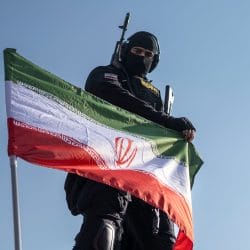

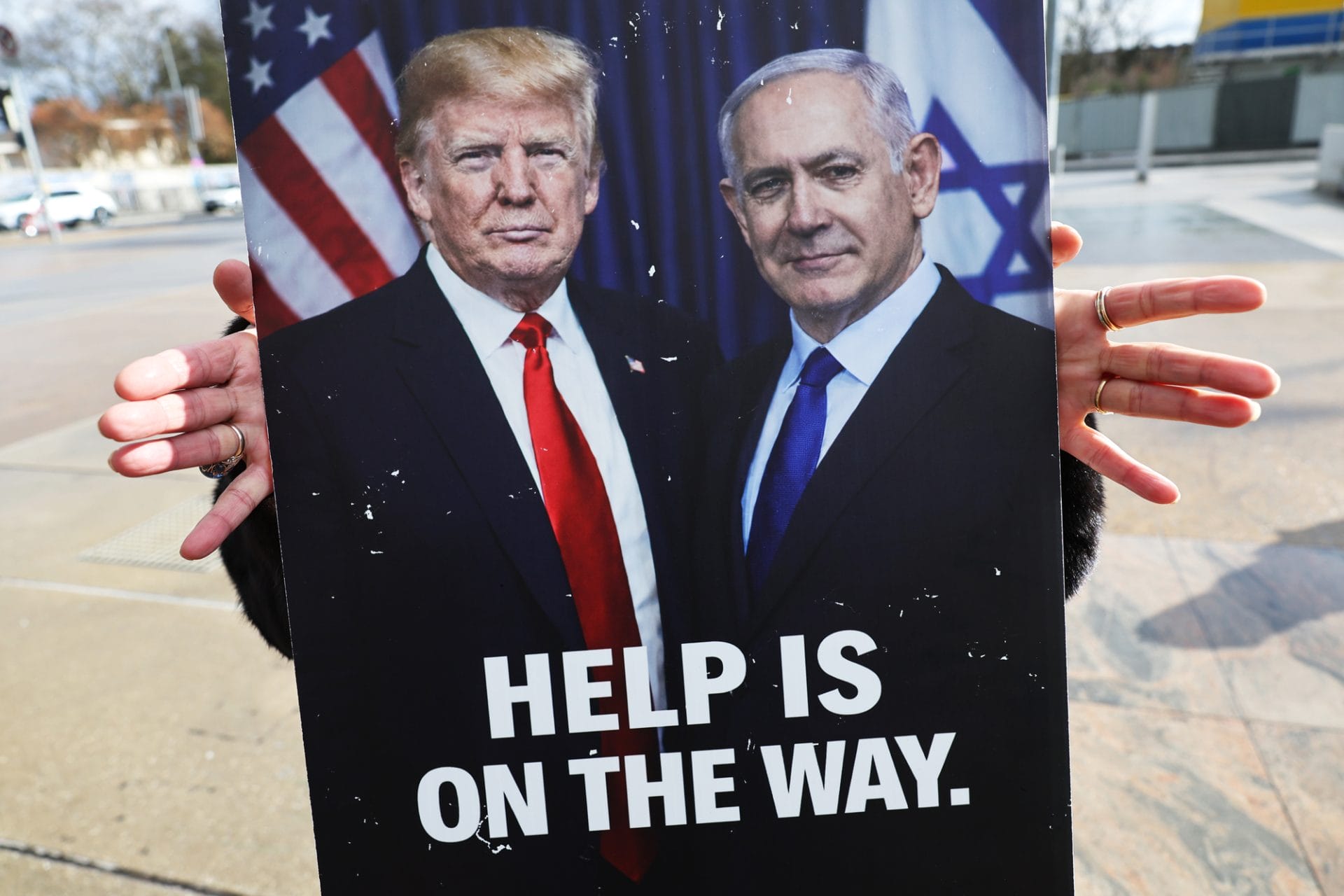
That’s where Israel comes in. Some White House advisers reportedly believe it would play better politically for Israel to strike first rather than the U.S., and thus force Iran to retaliate. Like Trump, Israel’s Prime Minister Benjamin Netanyahu is a man with an eye on impending elections (October at the latest) is Prime Minister Benjamin Netanyahu, who makes no secret of his ambition to see the Iranian regime brought down. Netanyahu — backed by almost the entire Israeli political spectrum — is clearly champing at the bit, but aware of the danger of being seen to drag the U.S. into a potentially messy embroilment. One reason perhaps for the unusually discreet nature of Netanyahu’s sixth visit to the White House on February 11 — in through the back door, no lovefest press appearances.
Which may also actually have been a sign that the two allies might not be on the same strategic page. Plunging Iran into fragmentation and chaos would absolutely fit Israel’s playbook, but not necessarily America’s. The two are working at cross-purposes in Syria, where the Israelis are pushing against a strong central government which the U.S. is supporting, even against its erstwhile Kurdish allies in the north-east.
If there are two constants in the current equation, they are that the Iranian people’s disillusionment and rage against the regime will not go away, and neither will Israel’s desire to overthrow it. But if Trump does not share that goal, he will have to find a face-saving way to wriggle off the hook he has created with his ostentatious military buildup.
A version of this story was published in this week’s Coda Currents newsletter.Sign up here.