








Why Kleptocrats go to war without a care in the world

Kleptocracy is a global system, which allows crooks, thieves, oligarchs, tycoons, and the like to enjoy their wealth while evading any responsibility to the society where they obtained that wealth. It infects different countries to different extents, and I’ve been very impressed by the Bloomberg investigations into how kleptocratic the Iranian elite has become. If you’d like a shortcut to those investigations, this new video is worth watching. Obviously, Iran’s regime has been vicious and aggressive from the start, but I do think there is a new kind of vicious aggression that develops when a country’s elite becomes kleptocratic, and thus is — in essence — colonising its own country.

Subscribe to our Coda Currents newsletter
Insights from the Coda newsroom on the global forces that shape local crises.
If it is extracting wealth, hiding that wealth offshore and thus secure in its future, it is able to take risks and make decisions without concerning itself about their effect on ordinary people. “While ordinary Iranians contend with a collapsing currency, rising prices, fuel shortages and now war, elites like (Hossein) Shamkhani have translated political lineage into global capital — buying property abroad, securing foreign passports and moving freely through systems that everyday citizens cannot enter,” Bloomberg notes.
Much of the elite’s ability to enrich itself has come from its evasion of Western sanctions, which Iranians have had decades of practice in learning how to dodge. And the role of cryptocurrencies in enabling Iran’s kleptocrats is clearly significant, as demonstrated by this report from Chainalysis. But of course the backbone of the corruption has been the elite’s control over trade, and thus its ability to move value to safe havens like Dubai (that’s not looking as safe as it did of course but, don’t worry, the money can easily find a new home), which gives it the security to fire missiles without worrying too much about retaliation.
In this though, I’m not sure Iran is particularly unusual. A lot of the governments involved in the crisis in the Middle East are a bit like those F. Scott Fitzgerald characters who “smashed up things and creatures and then retreated back into their money or their vast carelessness”.
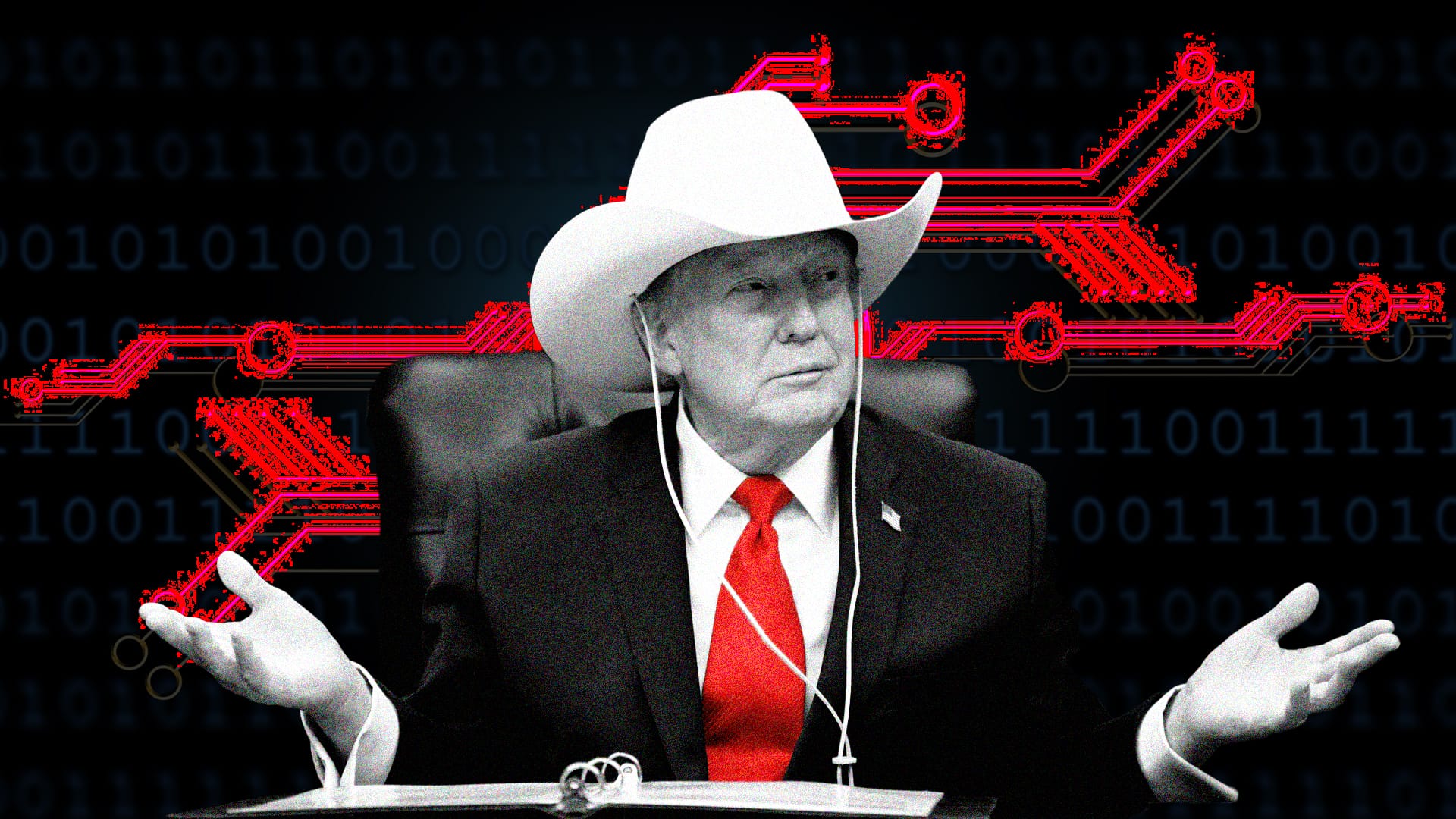
Israel’s Benjamin Netanyahu has been dancing on the edge of a corruption trial for the best part of a decade, ever since he was indicted in 2019 for, among other things, accepting “hundreds of thousands of pounds in luxury gifts from billionaire friends”. Donald Trump’s family has assets worth more than double what they were just two and a half years ago. The earnings from crypto alone are enough to guarantee the most comfortable of futures. These two are very definitely careless people, as is everyone around them.
If this ill-planned military adventure ends badly, then the elites of none of the combatant countries will end up suffering in the way that ordinary Iranians, Israelis or Americans will. This sense of impunity infects much of the discussion of the war: how, for example, could someone who feels any connection to other people be exulting in their death in the way that U.S. Secretary of War Pete Hegseth does? In this bloodthirstiness, as in so many other aspects of kleptocracy of course, Russia led the way, but the rest of the world is catching up and I don’t think we’re ready for what that will look like.
An important aspect of this, again long visible in Russia with its dreadful public services and military failure in Ukraine, is that corruption does not just enrich elites, it also degrades state capabilities. “Corruption at the top always rolls downhill. Once it becomes open and acknowledged, it leads to corrupt and slovenly acts throughout a system,” as Phillips Payson O’Brien argues, in a piece which builds on another article in which he lays out how the Russian model might be worth applying to much of what’s happening in the United States.
This of course adds fresh weight, not that it’s needed, to the urgency of shoring up defences not just against foreign interference in the democratic processes of those countries that still have them, but to getting big money out too. It’s great that a U.S. politician has, for the first time, taken the Political Integrity Pledge and won (though admittedly only a primary), but just to get to the stage of standing in the general election, he’s had to raise more than $20 million. Too much of that and pretty soon you’re talking about real money.
This week at Tether
Talking about real money, the latest episode of Tether watch is a weird one: our favourite crypto concern has just invested $50 million in a smart mattress company. Now admittedly, that isn’t even two days’ worth of last year’s profits, so it’s not exactly a big deal for CEO Paolo Ardoino but it’s still sufficiently sinister to be worthy of mention.
I find it disturbing enough that tech companies are harvesting our browsing history to make money from, but it’s a whole other level to have Tether — Tether!?! — monitoring what people get up to in bed. It’s all, apparently, about personal sovereignty, which is to say you should stop trusting big companies with your data and instead trust it to Tether, including with what’s happening in your head: “Paolo’s $200 million acquisition of a majority stake in brain-computer interface company Blackrock Neurotech may not be because he is optimistic about the size of the brain-computer interface market, but because he does not want the brain-computer interface to be controlled by others”.
Historians are going to be so confused by this; assuming of course that there will still be historians, which may be an over-optimistic assumption about a future with brain-computer interfaces.
The need to know your enemy
Related Articles


I’ve been talking to quite a lot of people about money laundering of late, and one of the enduring problems is the lack of reliable ways to gauge the scale of the problem. We’ve been saying it’s between 2% to 5% of the world economy since the late 1990s, but beyond repeating that age-hallowed guesstimate, how do you measure it?
Often we turn to other measures, such as how many suspicious activity reports get filed, or how many fines get imposed. So, on that note, is it good or bad that the UK’s Financial Conduct Authority imposed fines last year of just £124 million, a decline of 78% from half a decade earlier? Maybe this means there’s 78% less crime? Or maybe it means that the FCA has stopped investigating 78% of crime? Or maybe 2021 was just a really big year for fines (which it was)? Or maybe something else happened?
The answer to this is that we should properly investigate money laundering not just criminally but also academically, looking at gaps in statistics and devising new methods of measuring how large the criminal economy is, rather than rely on proxies for it. That would not only help us identify what to target, but also help us see what techniques are working as criminal wealth rises and falls. As it stands, it feels like we’re waging a war without a clear idea of where the enemy is, and what the final goal might be, and there’s quite enough of that going on elsewhere at the moment.
A version of this story was published in this week’s Oligarchy newsletter. Sign up here.