







The performative war on money laundering

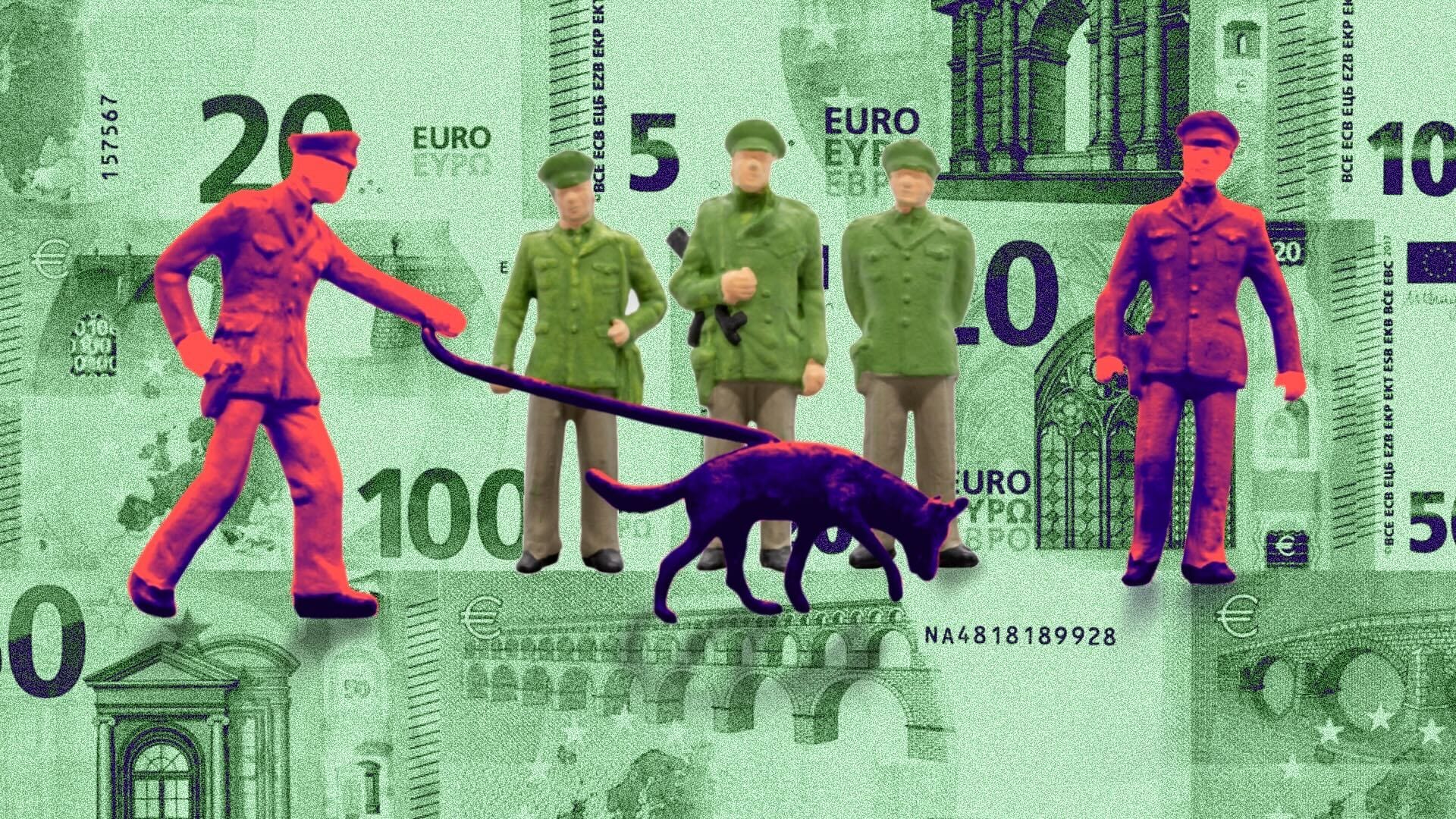
Dutch friends like to tell me that their nation’s primary characteristic is bluntness, and the Netherlands’ Court of Audit has done nothing to challenge the stereotype with its bracing assessment of the country’s and, by extension, the world’s failure in fighting money laundering. Published last month, after an extensive analysis of the country’s efforts to stop dirty money, the Court’s report concludes that the system is expensive, discriminatory, and — possibly — completely ineffective. No one has really checked on that last point, so they can’t be sure, which if anything makes it all worse.

Subscribe to our Coda Currents newsletter
Insights from the Coda newsroom on the global forces that shape local crises.
The Netherlands hosts the largest port in Europe, and is therefore home to a vast smuggling industry — Dutch politicians not infrequently warn that it’s becoming a narco-state — which requires an equally vast money laundering industry to service its profits. The Court of Audit set out to check the government’s response to this challenge, concluding that it cost banks €1.6 billion a year. It’s a price tag that has increased by almost 17% between 2021 and 2024, during which time the number of reports the banks’ 13,000 compliance officers made more than doubled.
“We think it is important that these employees make a meaningful societal contribution to preventing and combatting money laundering. There is no evidence that shows that they do,” the report witheringly observes.
The court sent surveys out to “politically-exposed people” (PEP is a jargon term meaning anyone in a position of power, or a close relative or associate) asking about their experiences. One person’s 83-year-old mother was asked to explain the source of an inheritance she received after the PEP applied for a loan. It is an eye-opening section, revealing how process is prioritised over any kind of judgement about where the risk of money laundering genuinely lies, but the real shock is in the section about different religious groups, which shows how the transactions of immigrant-focussed churches and mosques are systematically checked more thoroughly than local Protestant or Catholic congregations.
“A bank told a mosque that it was not possible to collect so much money after a prayer meeting,” the report notes. “The mosque’s trustees said the bank could come and see for itself but the bank declined. Feeling powerless and unable to deposit the money with the bank, the trustees hid it in the mosque.”
Imagine if we had an ongoing health crisis. And imagine that the government had created an expensive, intrusive system to tackle it, which was generating an endlessly increasing amount of paperwork, employing thousands of people and actively discriminating against religious and ethnic minorities. Surely, someone would at least put in the hours to check if the system worked, whether it was making people healthier, and assess therefore whether all these bad side effects were justified?
With anti-money laundering policy, that is simply not happening. It’s based on faith rather than facts: we just need to do more of the same thing, and eventually we’ll get the results we want; if we don’t, we need to do the same thing even more. Interestingly, Texan judge Jeremy Kernodle — fresh from gutting the Corporate Transparency Act — has returned to the fight against anti-money laundering regulation. He has killed Geographic Targeting Orders, which were supposed to collect information around real estate transactions. “FinCEN’s explanations are vague, conclusory, and unpersuasive,” the court ruled. “The fact that some bad actors have conducted non-financed real estate transactions does not make such transactions categorically ‘suspicious.’”
I’m not saying I agree with Mr. Kernodle, because I don’t, but I don’t think pushback on anti-money laundering orthodoxy is necessarily a bad thing, since it obliges us to think more deeply about what actually works, rather than just going along with ineffective old policies. I hope people outside the Netherlands read the Court of Audit’s report and start wondering whether this approach isn’t long past time for a complete overhaul.
How do you solve a problem like crypto?
It’s quite unusual for there to be a divide in the UK’s anti-corruption community, which tends to agree on technocratic solutions to the problems around illicit finance, but one has emerged around the role of cryptocurrencies in political donations. Spotlight on Corruption doesn’t think the government’s moratorium on crypto donations goes far enough. There needs to be a ban, they argue, in primary legislation with additional safeguards. I agree.
The folks at RUSI, on the other hand, think a moratorium on crypto donations is a better idea since it would prime the country to take regulating cryptocurrencies more seriously, and prepare the way for them to be widespread. Take a look, judge for yourself, and let me know what you think. The difference may reflect deeper and unresolvable political differences in how countries should respond to globalisation, but it’s an interesting one to think about.
One thing I think we all agree on is the need for an urgent overhaul of all rules around electoral finance, while there’s still an honest system to approve them.
On that note, interesting news from Cambodia, which has extradited Li Xiong to China. Xiong, who is accused by governments worldwide of playing a key role in the now-collapsed Huione group, which was laundering money for crime syndicates on an industrial scale, with particular expertise in cryptocurrencies. Of course, the criminals have not stood still and have new markets up and running, but it is striking how quickly the extradition went ahead.
Related Articles



In contrast, the legal proceedings around the mammoth tax fraud exposed two decades ago by Sergei Magnitsky grind tortuously on, with the culprits still safe in Russia. They certainly enjoyed themselves in Europe for a while, however, as a court case in Paris shows. “The spending spree included: €668,517, ($771,703) at a Parisian art and antique gallery; €696,015 ($803,445) across two high-end French women’s fashion brands; €96,814 ($111,757) at a luxury jewellery store in Courchevel, an exclusive ski resort in the French Alps; and €127,182 ($146,813) for a Courchevel tour package.”
There are few things that reveal the moral bankruptcy of the regime in the Kremlin more than this case. It’s not enough that corrupt officials could kill a good man who exposed their $230 million theft from the Russian people, but the Russian state then shielded them while they splashed the loot on European luxury holidays, and continues to do so to this day.
Nothing on the same scale is happening in the United States of course, but still this analysis of how enforcement of the Foreign Corrupt Practices Act is being politicised is a bit grim: “The transformation of U.S. antibribery tools into economic weapons also threatens to undo the global system the United States helped establish to punish business corruption.”
A version of this story was published in this week’s Oligarchy newsletter. Sign up here.