







Holding the U.S. to account, Tether exits EU & Congo’s conflict coltan

The United Kingdom has taken over the presidency of the Financial Action Task Force, the global standard-setter on tackling money laundering, and seems determined to keep calm and carry on despite the gigantic Donald Trump-sized hole being blasted in everything it’s trying to do.

Subscribe to our Coda Currents newsletter
Insights from the Coda newsroom on the global forces that shape local crises.
The new president of the Financial Action Task Force is Giles Thomson, a career civil servant and archetypal safe pair of hands, who’s declared that the organisation’s priority for the next two years is fighting fraud. He estimated the global cost of fraud at $500 billion, which — if compared to the standard estimates of the volume of global money laundering as making up 2 to 5% of everything — means it contributes between a tenth and a quarter of all profits from financial crime.
Fraud is clearly thus a Very Big Deal, and therefore a well-chosen target for Thomson because everyone (including me) agrees that we need to hit it. However, I think I saw a hint of other perhaps more controversial tasks in the rest of his proposed priorities. The suggestion, for example, that the Financial Action Task Force (FATF) will conduct “proportionate assessments of lower capacity countries” looks to me like a recognition that it needs to stop criticising poorer countries that don’t actually launder money just because their legislation isn’t perfect.
This has been a weighty accusation in the past, not least because of the implicit suggestion of racism, made by, among others, regulator Charles Littrell, who summarised the FATF’s great flaw in 2022 thus: “the vast majority of dirty money and assets resides in, passes through, or is facilitated by the world’s largest and richest countries. How then do the world’s main [anti-money laundering] risk rankings invariably centre blame upon small, relatively poor, and nonwhite jurisdictions?”
This is not an academic question. Being blacklisted by the FATF is serious, and there has been definite unfairness in the past in which countries have ended up being singled out for a punishment beating. Hopefully a recognition of this reality is hidden somewhere inside Thomson’s rather gnomic utterance that “the FATF will support countries and the private sector to focus effort where the threat is greatest.”
Fortunately, the FATF will have an immediate opportunity to demonstrate that it shows neither fear nor favour when it comes to doing the right thing when it publishes the results of the ongoing evaluation of the United States.
The U.S. was last evaluated in 2016, and the FATF made various recommendations, which Washington was supposed to have implemented within three years, and sort of did. With the passage of the Corporate Transparency Act in 2020, some progress was made, but since Donald Trump returned to the White House that has gone into screeching reverse.
Prosecuting foreign corrupt practices is “not a priority, ”transparency around residential ownership has been suspended, the Corporate Transparency Act has been gutted, and crypto is everywhere. Above all, of course, the president himself has been making money at a rate that even Vladimir Putin would have to admire. His headline earnings figure — $2.2 billion in the first year of his second term — is clearly unprecedented, but so are the details.
What for example will future historians make of the fact that the president declared his ownership of the trademark for “THINK BIG AND KICK ASS”? Ha, trick question, there won’t be any historians. They’ll have been replaced by AI.
Tether watch
Talking of history, I had slightly been hoping that the U.S. dollars in circulation might hit the appropriately round number of $2.5 trillion to mark the round 250th anniversary of the Declaration of Independence, but it was not to be. If only the Fed had launched the $250 bill in time, perhaps it would have got there, but we’ll just have to wait.
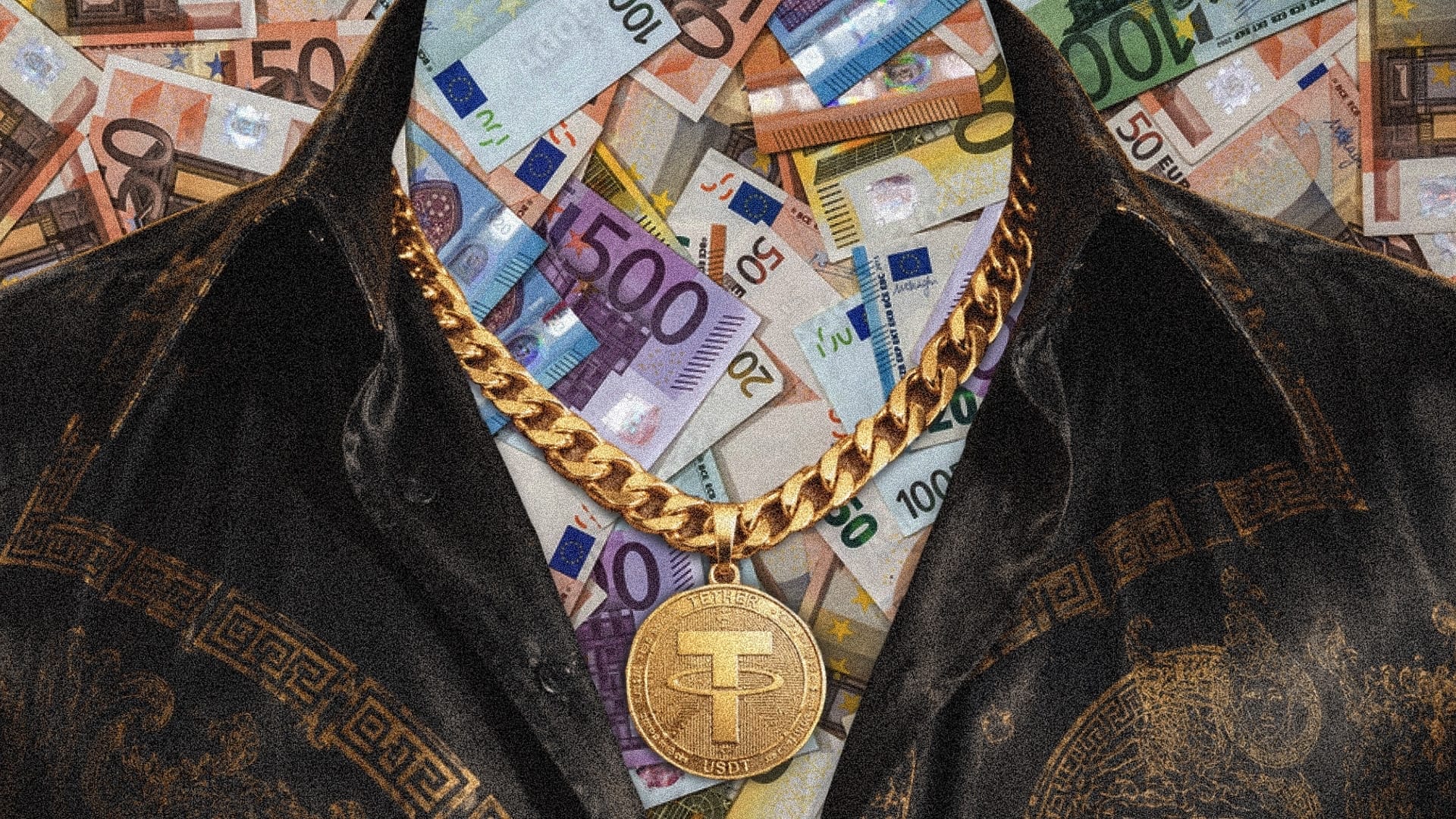
Meanwhile, there’s an interesting time ahead for Tether, this newsletter’s favourite cryptocurrency, which is sailing into choppy waters. It has decided to pull its USDT out of the European Union rather than to comply with the Markets in Crypto Assets regulations on stablecoins, which is a boost for its great rival Circle (USDC), which is very much available in Europe.
The two big stablecoins have markedly different strategies: Tether is dismissive of regulators, while Circle cosies up to them. And now here comes a new rival in Open USD, which is backed by many of the world’s largest banks and tech firms, and which also promises to abide by everyone’s regulations. Is Tether at risk of becoming irrelevant?
Congo’s conflict coltan
Huge credit to the good folks at Global Witness for this report from the Democratic Republic of the Congo, where coltan smuggling is helping to perpetuate the grim conflict in the east of the country. It is the kind of methodical, thorough research that really helps open your eyes to how grim things can be, and how complicit the rest of us are in a global supply chain forged from conflict.
Related Articles

Congolese people hack coltan out of the ground under the eyes of M23 guerrillas, who then smuggle it into Rwanda, where it is repackaged as Rwandan and given certification intended to show it’s not from a war zone. It is then shipped to refiners in China or Kazakhstan to be processed into tantalum, which is in turn sold to leading companies to be incorporated in the phones, tablets, jet engines, and other products that we all rely on for our lovely modern lives.
“Rwandan official figures show that coltan exports have increased more than 2.5 times between 2021 and 2025,” the report notes. “Coltan is an important revenue stream for Rwanda, which levies a 5% tax on exports. Since 2023, it has become the country’s second-largest export earner, after gold.”
And where does the gold come from? Also from the Congo, which is why the U.S. Treasury sanctioned a Rwandan gold refiner last month, following action taken by the European Union against the same company last year, but it has done little to rein in M23.
A version of this story was published in this week’s Oligarchy newsletter. Sign up here.