







Can a Task Force set up to punish the little guy, take on Trump?
This is going to be a big year for the Financial Action Task Force, the world’s standard-setter on money laundering regulations, under its new president Giles Thomson. Quite apart from the standard folderol of plenary meetings, reports and publications, it is due to send a mission to assess the United States.
This whole process will not be quick, and there will be the usual abundant opportunity for acronyms, circumlocution and horse-trading. But eventually the hooves are going to have to hit the road. There is simply no way of hiding the fact that, under Donald Trump, the United States has broken its promise to bring greater transparency to shell companies; nor that it has scaled back prosecution of financial crimes, pardoned convicted financial criminals, and unleashed a crypto frenzy.
Throughout its history the FATF, set up by the G7, has been able and willing to overlook transgressions from big countries that it wouldn’t tolerate from smaller ones. It punished the remote island states of Niue and the Marshall Islands in its first ever blacklist for their lack of transparency around shell companies, for example, while merrily tolerating the fact that not even the Federal Bureau of Investigation could figure out who owned a corporation in Nevada. Nauru got punished for moving dirty Russian wealth while the UK and Switzerland didn’t.
The FATF’s structure, which ensures it is dominated by large economies, is a classic example of how, if you’re not at the table, you’re on the menu. But, in the past, those large economies have at least pretended to go along with its recommendations. They’ve made promises, passed legislation, convened working groups, said the right things: all of which has given everyone the diplomatic cover they need to keep each other off the naughty step.
Trump’s not doing any of that, and it’s hard to believe that he’s going to change that habit. If the FATF criticizes his administration, I think we can safely assume Trump won’t take that well, and could — if past behavior is any guide — pull the United States out. But if the FATF doesn’t criticize what he’s been up to, it will lose all credibility.
Speaking for myself, I think the FATF’s conception, structure and techniques are all flawed, perhaps irreparably, and that it has been part of the problem, rather than part of the solution, for most if not all of its 37-year history. Perhaps, therefore, Giles Thomson should get ahead of the looming fiasco by declaring a complete overhaul of the whole organization, re-examining its recommendations, its memberships, its strategy, and more.
What are the chances of that happening? Well, here’s some news from the Pacific: “Papua New Guinea one step away from being blacklisted, global money laundering watchdog warns”. Is Papua New Guinea the problem? No. Do we get anywhere by pretending that it is? Also no. Will the FATF carry on regardless anyway? I would love to be surprised by the answer to that question.
The need to clean house
I’m a big fan of this video from Transparency International’s UK chapter, which lays out the inglorious history of corruption in British politics, and urges the government to be more ambitious in its new piece of legislation. TI has pointed out three areas where it thinks the government should go further, and I agree with all of them, but I would also like to see a complete ban on crypto donations, which would help prevent compliance departments being overwhelmed by automated efforts to circumvent donation limits.
I would also urge you to read this comment piece from RUSI about the threat to democracy posed by big funders from the American right, which has significance far beyond British politics. The world’s remaining democracies have been slow to recognize how radically the values of many U.S. billionaires have diverged from what we traditionally associate with conservatism, and to shore up their defences against them. “The task now is to strengthen our democratic guardrails — calmly, transparently and proportionately — before those boundaries are redrawn by others,” the writers Neil Barnett and Eliza Lockhart conclude.
Transparency International’s Russian chapter has been in exile since 2022 for obvious reasons (last year, for example, it had to issue a statement to argue that “fighting corruption is not terrorism”) but it has continued to conduct really valuable investigations into how illicit wealth flows in and out of its home country, including a recent one detailing the use of shell companies in the UK’s tax havens to trade with Russia, and identifying $8 billion worth of transactions.
The worst offender as a source of opaque companies was the British Virgin Islands, though Bermuda was also a problem, moving sanctioned products — including lead and zinc — as well as oil and other fossil fuels, a surprisingly large number of yachts, and a jet that ended up belonging to Chechen strongman Ramzan Kadyrov (whose ill-health is, apparently, once more the subject of speculation, poor chap).
“For many years now, we have observed a dysfunctional equilibrium in which illicit financial flows, tax evasion, sanctions circumvention, and other forms of misconduct are channelled through firms and intermediaries registered in unaccountable jurisdictions,” TI-Russia notes. Fortunately, however, the British government is hosting an illicit finance summit this June and so has the perfect opportunity to set an example by making sure this kind of thing stops happening on the territory it’s responsible for if nowhere else.
Related Articles

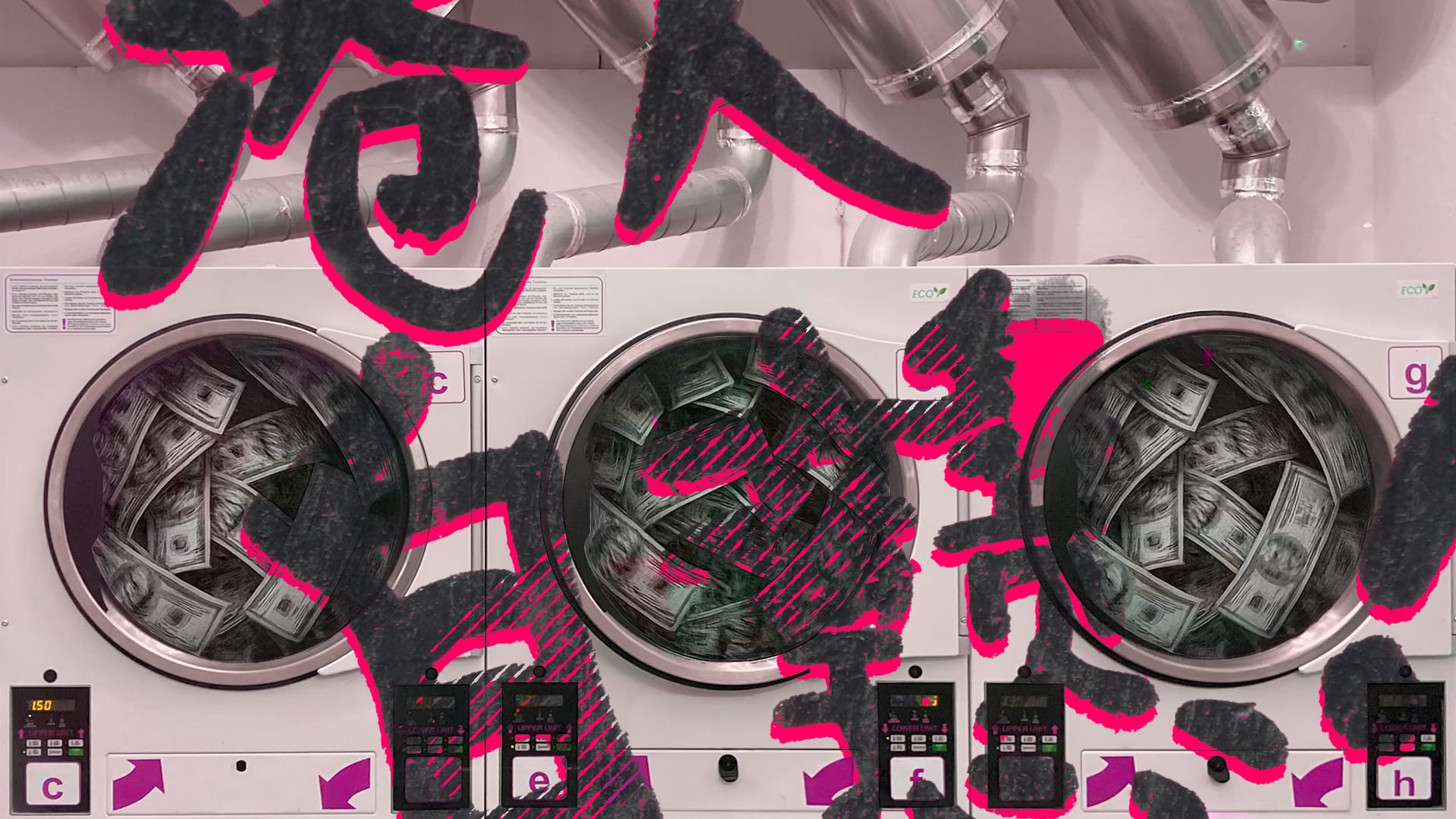

Here’s an interesting story from the Netherlands, where luxury firm Louis Vuitton was fined half a million euros for failing to identify customers spending large amounts of cash. This case was part of an investigation into the Chinese money laundering technique known as ‘daigou’, in which value is transferred internationally not via the financial system but by buying expensive objects and then reselling them in China. High-end fashion is often used in the system, and it will be intriguing to see if other countries follow the Dutch lead and investigate unusual cash purchases.
And here’s a piece on our favorite crypto company Tether, which is apparently valued by market participants at between $200 and $350 billion. That is less than estimates made in the summer, but still an awful lot of money. Fun fact: finance firm Cantor Fitzgerald has a five percent stake in Tether, which is thus worth $10 to $17.5 billion, via a convertible bond. Another fun fact: Cantor Fitzgerald is owned by Commerce Secretary Howard Lutnick’s children.
Interesting question, would the prospect of your family earning a windfall of that size affect how stringently you would approach the regulation of a financial institution accused of involvement in industrial-scale money laundering? Lutnick, who led Cantor Fitzgerald for over 30 years, is of course not the kind of man who would let petty cash cloud his judgement, so this question is of academic interest only, but still, worth thinking about.
A version of this story was published in this week’s Oligarchy newsletter. Sign up here.