







How Stablecoins make it easy to sidestep sanctions

In recent years, Western countries have been very reliant on sanctions as a tool of foreign policy and I think it’s a mistake. It’s not too much of an exaggeration to say that sanctions are law enforcement by press release. They punish people without a trial, with little if any chance of appeal, while outsourcing all the hard work to private companies.

Subscribe to our coda currents newsletter
Insights from the Coda newsroom on the global forces that shape local crises.
There’s a small insight into what this looks like in practice from a fine imposed on Britain’s Bank of Scotland last week over its failure to notice that a new customer had been sanctioned for his role in Russian-occupied Crimea. He had registered with a slightly-different spelling of his name — “a changed character and an additional character in the forename, a missing middle name and a changed character in the surname” — which briefly out-foxed the bank’s compliance systems.
I’ve written about this particular gentleman’s adventures in transliteration before. Having opened the account, the bank failed to notice that although he had been removed from the European Union’s sanctions list, he had not been removed from the equivalent UK list, meaning that for 18 days he had access to financial services he should not have had, until various automatic systems and manual checks caught up with him.
In the circumstances, the Bank of Scotland is probably happy to pay its 160,000-pound fine, which also serves to remind financial institutions to invest in all possible compliance-related software, to employ more people who can check and double-check everyone and everything, just in case the next fine is bigger and comes with sharper teeth.
The upshot is that sanctions just got more expensive, more laborious and more complicated. But have they got any more effective? For that, we need to remember what they were supposed to achieve. “Our actions, taken in coordination with partners and allies, will degrade Russia’s ability to project power and threaten the peace and stability of Europe,” said then-Treasury Secretary Janet Yellen in February 2022, when announcing a first tranche of sanctions, to which many others have since been added, in many countries.
Now, I’m not saying this hasn’t been completely without effect – Russian oil revenues dropped sharply last year, for example — but it’s important to remember she was talking almost exactly four years ago, which means Ukraine has been resisting Vladimir Putin’s Russia for longer than either the USSR or the USA spent fighting Adolf Hitler’s Germany. Whatever the argument about the effectiveness or otherwise of sanctions in eventually stopping Putin’s war machine, you have to agree that they haven’t worked very quickly.
And this creates a problem. As with incompletely applied restrictions on money laundering, sanctions imposed without other enforcement mechanisms fail to defeat the people they’re aiming at, while incentivising them to learn how to circumvent restraints.
So what’s the solution? Should we just give up on sanctions altogether and create a financial free-for-all equivalent of this year’s Enhanced Games, when cheating will be legalised so a rich man “with a mission to build superhumanity” can pay poorer people to take performance-enhancing drugs and see what happens?
You might think that’s a rhetorical question to which the answer is “OBVIOUSLY NOT!!!”, but that’s kind of what’s already happened. In April, Donald Trump’s Department of Justice decided to step back from the Biden administration’s policy of trying to make crypto companies obey the law. “The Department will no longer target virtual currency exchanges, mixing and tumbling services, and offline wallets for the acts of their end users,” the deputy attorney general said in a memorandum titled ‘ending regulation by prosecution’.
It is hard to over-stress quite how wildly this Enhanced Games-esque policy diverges from the approach taken towards money laundering since 1970, when the authors of the Bank Secrecy Act specifically stated that banks were responsible for the criminal acts of their clients, a financial anti-doping policy subsequently adopted by the whole world.
What’s been the result of the White House’s unilateral surrender? Obviously, it’s too early to see the full effects, but the general outlines of a catastrophe are already visible.
“Illicit cryptocurrency addresses received at least $154 billion in 2025. This represents a 162% increase year-over-year, primarily driven by a dramatic 694% increase in the value received by sanctioned entities,” said Chainalysis, the respected crypto investigations organisation. “We must caveat that this figure represents a lower-bound estimate based on illicit addresses we’ve identified to date.”
That means sanctioned entities moved almost seven times more value via crypto in 2025 than in 2024! That whole approach of using Western dominance of the financial system to restrain geopolitical adversaries is gone, and who knows what, if anything, will replace it.
Related Articles

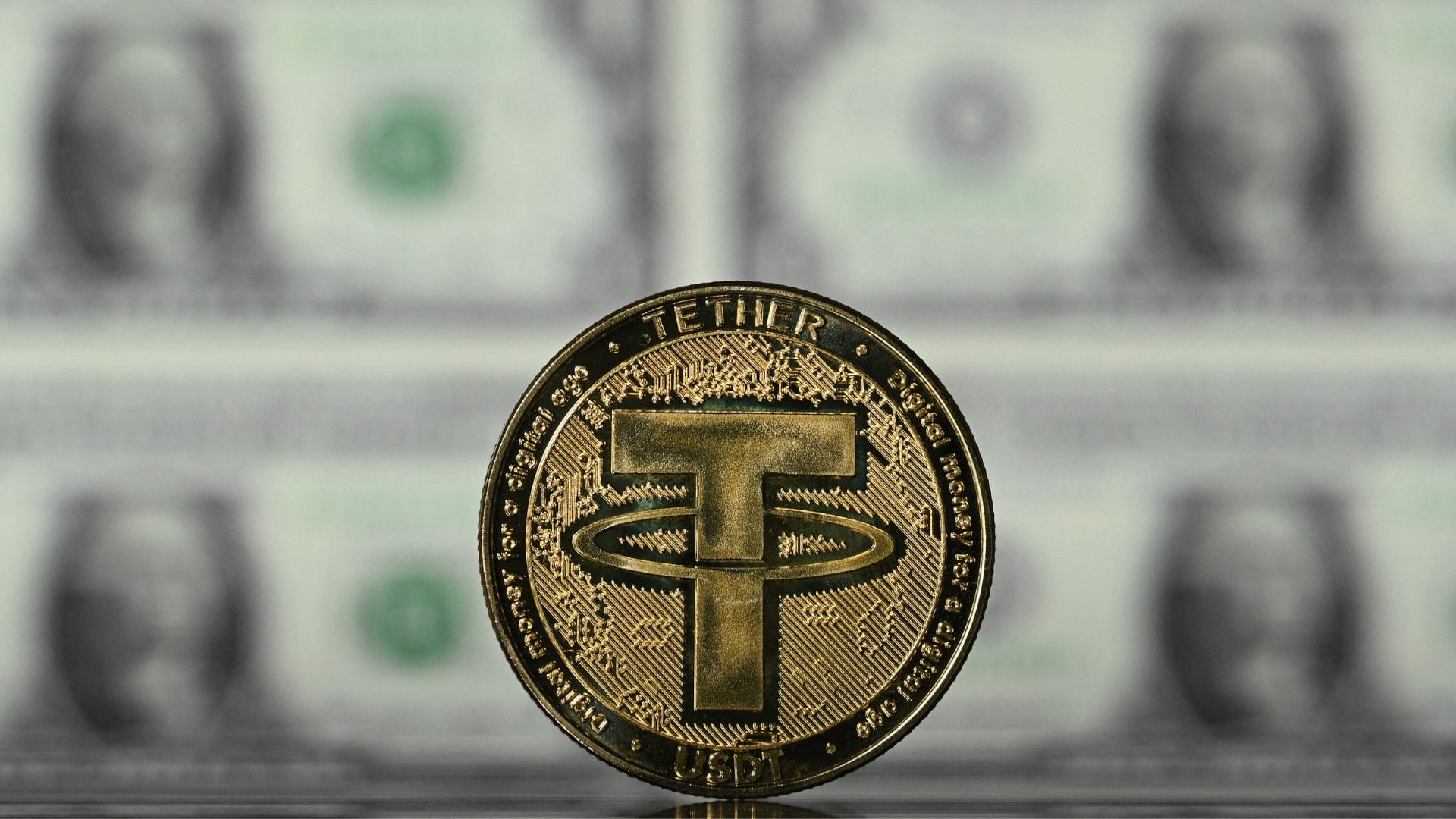
Stablecoins now account for 84% of all illicit volume, according to Chainalysis, which also separated out the booming business being done by Chinese money laundering networks, which are seizing an ever-greater share of the market with their “industrial-scale processing capacity, operational resilience, and technical sophistication”.
US officials love stablecoins, since their issuers tend to buy Treasury bills to guarantee their assets’ value, which helps provide some extra support for the long-term U.S. policy of piling debt onto future generations rather than raising taxes on presidents’ wealthy friends. But if the approach now involves handing a sanctions-evasion opportunity to mobbed-up Chinese kleptocrats, Russians and others, then it is even more disastrously short-termist than it already appears.
Stablecoin giant Tether, by the way, may be buying a lot of U.S. government debt but is also hedging its bets and investing heavily in gold, of which it buys two tonnes a week. Of course, it keeps its stash in nuclear bunkers in Switzerland. Because why wouldn’t the people behind Tether want to resemble Bond villains even more than they do already? Next month perhaps they’ll announce a new corporate headquarters inside a Japanese volcano, with its own shark pool, stealth catamaran, and space station.
And that’s before we get to the effect of artificial intelligence on how criminals can complicate and obfuscate crypto laundering schemes, something I’ve been hearing about for a while. “The intersection of AI and cryptocurrency reflects the operational reality of contemporary jihadism,” notes one rather terrifying report. “Current counter-terrorism finance systems” it warns, “are structurally misaligned with how terrorists use crypto today.” I see no sign that any government minister anywhere is close to being ready for any of this, or to be honest, even aware that it’s happening.
A version of this story was published in this week’s Oligarchy newsletter. Sign up here.