






Why Trump-backer Justin Sun is suing the Trumps’ firm

Donald Trump and the crypto world have done well out of each other. The Trump family has made profits of several billion dollars, and ‘cryptopreneurs’ have found the United States a newly supportive environment for their products. But the crypto world is not a single entity, and there are potential differences of opinion and approach between the parts that specialise in fraud, money laundering, and speculation (as well as the small number of societally beneficial uses), and a court case between billionaire Justin Sun and the Trump family’s World Liberty Financial threatens to blow those divides wide open.

Subscribe to our Coda Currents newsletter
Insights from the Coda newsroom on the global forces that shape local crises.
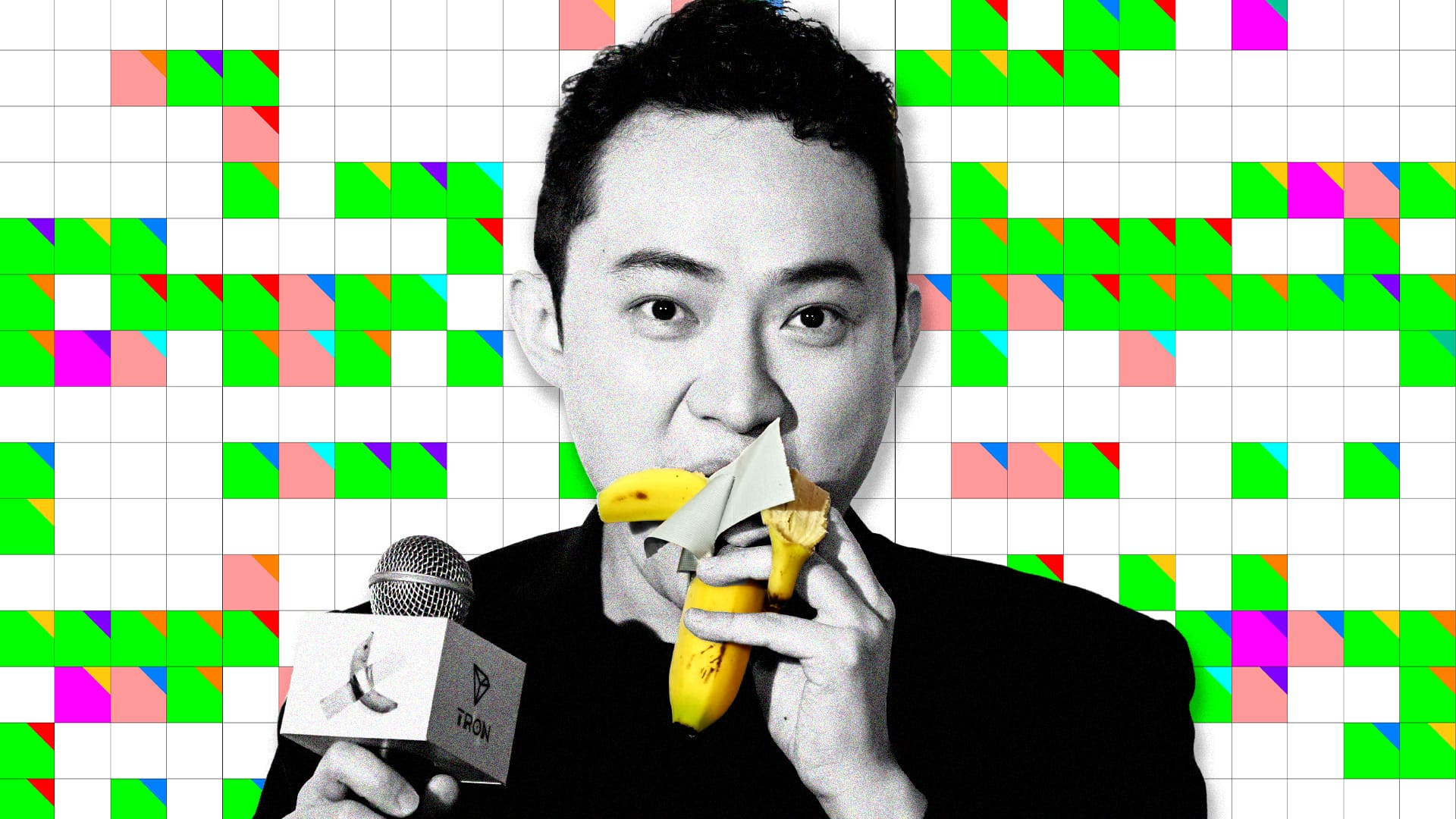
Sun is a colourful gentleman and a firm favourite of this newsletter, thanks to his efforts to essentially buy the Pitcairn Islands, his voyage into kind-of space, his consumption of a $6.2 million banana, his stewardship of the Tron blockchain, his premiership of Liberland, and his frankly adorable continued usage of “H.E.” (his excellency) as a title despite losing his Grenadian ambassadorship three years ago after being accused of fraud by the Securities and Exchange Commission.
He also had a key role in transforming Trump from cryptosceptic into cryptoenthusiast after investing millions of dollars in World Liberty Financial in late 2024, which helped to persuade the president — then running for re-election — that there was money to be made on the blockchain.
Considering the improbability of the Trump family building an actually successful crypto company, and the strong likelihood World Liberty Financial would find a way to keep investors’ money as has happened with Trump ventures in the past, quite a lot of people assumed Sun’s money was in reality more of a gift than an investment. But it appears these doubters were wrong, at any rate that’s what it says in the suit that Sun has filed in California alleging that World Liberty Financial has abused his rights.
“Mr. Sun invested $45 million to purchase $WLFI tokens from World Liberty not only because of the project’s claims that it would promote adoption of decentralized finance… but also because of the Trump family’s association with the project,” his claim states. “But as Mr. Sun unfortunately has learned, World Liberty’s operators, including Chase Herro, see the project as a golden opportunity to leverage the Trump brand to profit through fraud.”
Sun has been careful to make clear this is not an attack on the president (“Unfortunately, certain individuals on the World Liberty project team have been operating the project in a manner that goes against President Trump’s values,” he posted on X), who is, he says, being betrayed by underlings — as autocrats have always been throughout history — but he is certainly airing a lot of dirty laundry, which is likely to upset influential people.
Perhaps the most significant allegations, which World Liberty Financial denies, is that the Trump family’s company is on the verge of collapse, having paid most of its money to its owners, and that it tried to extort money from Sun to keep it in business. This is not just significant for its investors but also for America’s diplomatic ties, since Abu Dhabi has invested $2 billion via World Liberty Financial’s USD1 stablecoin, and the United States can ill-afford to further irritate its allies in the Gulf right now.
The timing of the lawsuit is interesting. It was notable that, shortly after Trump returned to the White House, the Securities and Exchange Commission paused its investigation into Sun. In March, that investigation was finally wrapped up, with Sun paying $10 million but not admitting wrong-doing, so he is perhaps no longer concerned about facing legal action himself.
Sun was also a major investor in Trump’s memecoin, but is not the only person who seems to have soured on that particularly unlovely project. One of the perks of being an investor in the token is the right to have dinner with Trump, but the value of that ticket dropped this year to just $539,000 from $3.28 million in 2025, with the Financial Times quoting an expert as calling the friendship between Trump and the crypto-world “a shotgun marriage,” which seems fair.
The Trump family has, however, made $320 million in fees from the memecoin alone, so I suspect they’re not that bothered.
A tale of two scammers
There was, hard though it is to imagine, a time when Trump was just a strangely-tinted TV personality with strong views on where Barack Obama was born. And back then, in those prelapsarian days, 2014’s billion-dollar Moldovan bank fraud was a big deal. It’s great to see that mega-oligarch Vlad Plahotniuc has been jailed for 19 years for his involvement in a crime that ruined his homeland.
Moldova has struggled through the resulting period of economic, financial, diplomatic and political turmoil, and it was great to see that Viktor Orbán’s defeat in Hungary has meant it can make progress on its movement towards membership of the European Union.
Related Articles

The other mastermind of the bank fraud is pro-Kremlin politician Ilan Shor who was convicted and sentenced in absentia. He remains, of course, at liberty. Though his A7A5 sanctions-evading cryptocurrency has still not recovered the trading volume it had before the recent hack of the Grinex trading platform where people bought and sold it. Grinex blamed the hack on Western intelligence agencies, but Chainalysis has an interesting alternative explanation, based on the fact that A7A5 is gradually being squeezed by Western sanctions (including the latest ones from the European Union).
“Faced with mounting international pressure and a shrinking operational footprint, actors associated with Grinex could be using the guise of an alleged hack to quietly siphon liquidity and execute an exit scam,” Chainalysis suggested. I’m not saying that is what happened and to be honest, I think it’s more likely that this was the handiwork of Ukrainian hackers or standard financial criminals. I mention it, however, because Shor does have a previous record when it comes to setting up a money laundering scheme and then defrauding everyone who was foolish enough to trust him with their money.
The billion-dollar bank fraud was a clever way to profit out of the ‘Moldovan Laundromat,’ which had been allowing Russians to smuggle money out of their homeland before Shor and his co-conspirators destroyed the Moldovan banking system and stole everyone’s cash. It would be remarkable if he had basically done the same thing for a second time with his stablecoin. Crypto people call it a rug pull.
A version of this story was published in this week’s Oligarchy newsletter. Sign up here.