




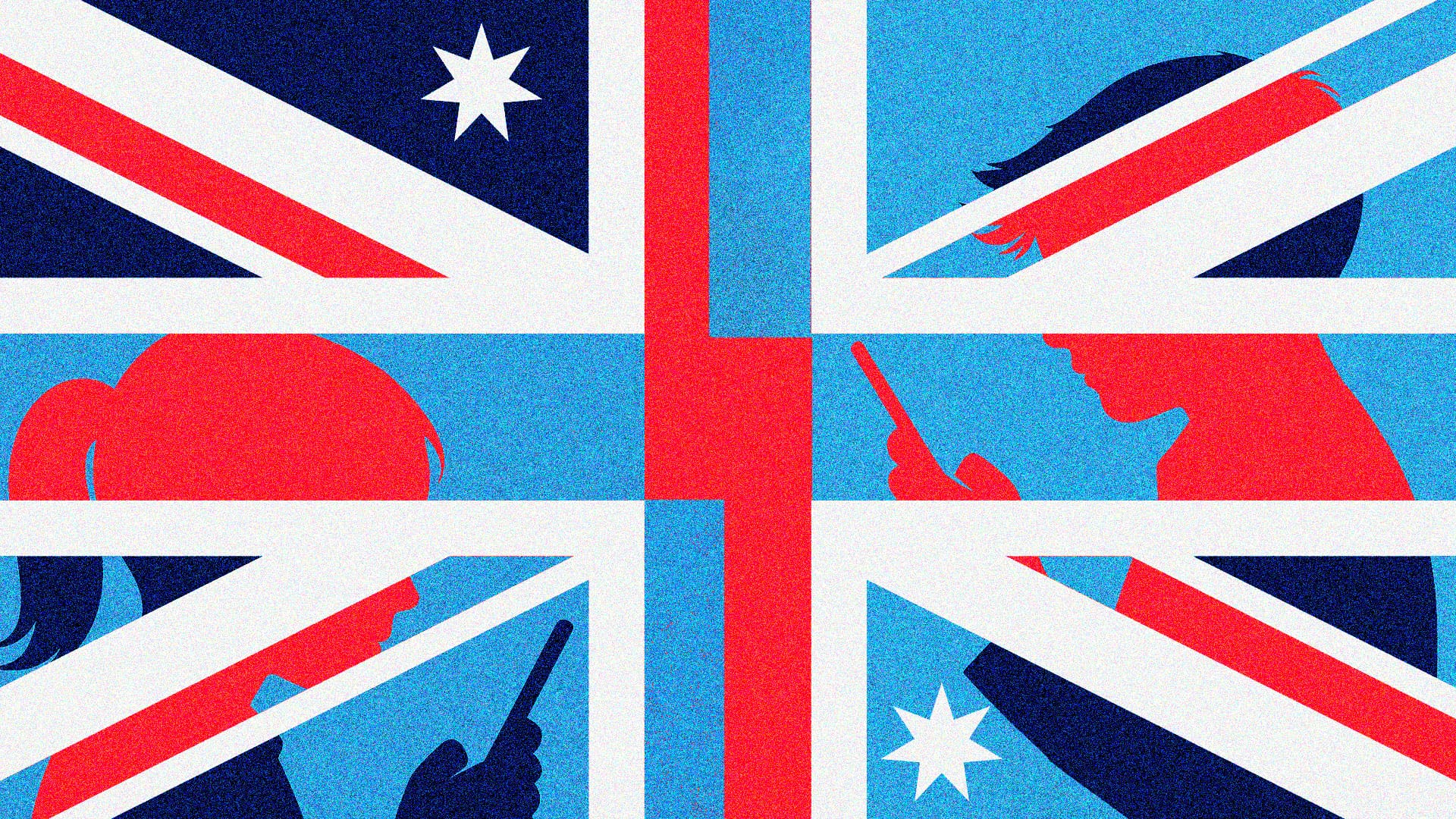
On December 10, after months of battle, buildup, and backlash, Australia’s groundbreaking social media ban for under-16s came into effect. Teens found themselves locked out of their apps, from Facebook to Instagram, TikTok, Snapchat, X, YouTube and Reddit, among others. They were only allowed back in if they could verify their age. “Taking back power from the big tech companies” was how Australian prime minister Anthony Albanese put it this week, when describing the need for the ban.

Subscribe to our Coda Currents newsletter
Insights from the Coda newsroom on the global forces that shape local crises.
“It makes me proud,” said Australian academic Julie Posetti, Director of the Information Integrity Initiative. “It genuinely makes me proud,” she told me from her desk thousands of miles away in Oxford. “Because you’re dealing with a small country at the bottom of the world — a wealthy Western state, but one with relatively limited ability to flex muscle when it comes to Silicon Valley. Australia has been on the front foot in a flawed way, but in an ambitious and frankly a brave way.” The Computer and Communications Industry Association, a trade group that represents several of the biggest Silicon Valley companies, has complained that the ban “undermines U.S. digital competitiveness.”
The social media ban for teens is the latest — and perhaps most muscular — move that Australia has made in recent years to stand up to Big Tech. It’s a push led by the country’s eSafety Commissioner, Julie Inman Grant, who has been critical in building Australia’s sophisticated understanding of Big Tech’s expanding power. “We are treating Big Tech like the extractive industry it has become,” Grant said in a speech about the ban back in June. Tech giants have been aggressively lobbying Australia for years to try to stem the tide of regulation, especially during the country’s pandemic-era push to get Google and Meta to pay news publishers for linking their content. Meta stonewalled the push, while Google did start paying news publishers, although it’s since been clearly signalling it wants to wind those deals down. But the legislation spooked the tech giants, who didn’t want to see other western states following in Australia’s footsteps.
As millions of teens lost access to their accounts, they flocked to other corners of the internet to air their grievances. “The Albanese government clearly doesn’t understand the impact this will have,” a teenager wrote on the Australian mental health forum ‘Beyond Blue’. “They think that just because we’re ‘kids’, we don’t know what’s best for us. It makes us look stupid, and that’s not fair.” Another agreed: “Honestly, it’s kinda scary. A lot of people my age (under 16) use social media not just for scrolling but for connection.” Yet the overwhelming majority of Australians support the ban. According to a nationwide survey carried out by Mark Andrejevic, Professor of Media, Film and Journalism at Monash University, and research company Roy Morgan, 78% of the population back the measure. In contrast, Andrejevic noted, many of his colleagues in academia oppose it. “Many academics studying social media started early on when it seemed more benign and there were clear benefits to the forms of networking it allowed,” he said. “I tended to be critical from the start because I study surveillance and the online economy.”
The Australian ban faces the same pitfalls that occurred when the U.K. enforced its age verification rules from July, preventing young people from accessing porn sites. Australians will now have to submit personal information such as their biometrics to access social media, meaning that private companies acting as gatekeepers will potentially have access to vast troves of personal data. On X, Elon Musk called the ban a “backdoor way to control access to the internet by all Australians.” Following his tweet, the Senate inquiry received 15,000 responses from the public in a single day.
On December 12, Reddit filed a lawsuit against the Australian government, arguing that as a discussion forum — rather than social media platform – it should be exempt from the legislation, which it says will curtail not just young people’s, but all Australian users’ rights to free and open political discourse. The legislation, the company said in a statement on its own website, is “forcing intrusive and potentially insecure verification processes onto teens as well as adults.” The company highlighted in particular the vague way the government defines social media, creating “an illogical patchwork of which platforms are included and which aren’t.”
Reddit’s concerns reflect Silicon Valley’s unease with Australia’s enthusiasm for regulation. Its ambitions to stand up to Big Tech run beyond social media. The government has also been attempting to build world-leading guardrails on Artificial Intelligence. But, rather like the European Union, Australia also has ambitious plans for the widespread adoption of AI, which has led the government to hold back from crafting tougher legislation on privacy, safety and transparency. “The fact they have backed off the guardrails for the moment, speaks, I suppose, to the economic hopes being pinned on the technology,” said Andrejevic. Even though it wants to stand up to Big Tech, Australia also sees itself as the right kind of place to develop a robust tech sector.
Related Articles



Still, Australia stands apart in the West in its attempt to face up to platform capture. A recent U.S. survey showed that a third of U.S. teens use social media, particularly TikTok and YouTube, “almost constantly.” Posetti put it to me this way – Australia’s always been a “nanny state” — a place where you can’t ride a bike without a helmet. It also has a “deep egalitarian strain,” says Andrejevic. “At least in ideology if not in practice.” So it tracks that the idea of a handful of foreign billionaires taking over the online world and pumping whatever they like into everyone’s feeds is, well, just not very Australian. And now, with Malaysia planning to ban under-16s from social media next year, several European countries and even a handful of individual U.S. states considering similar rules, will national governments be able to wrestle back some control from Big Tech?
A version of this story was published in this week’s Coda Currents newsletter. Sign up here.