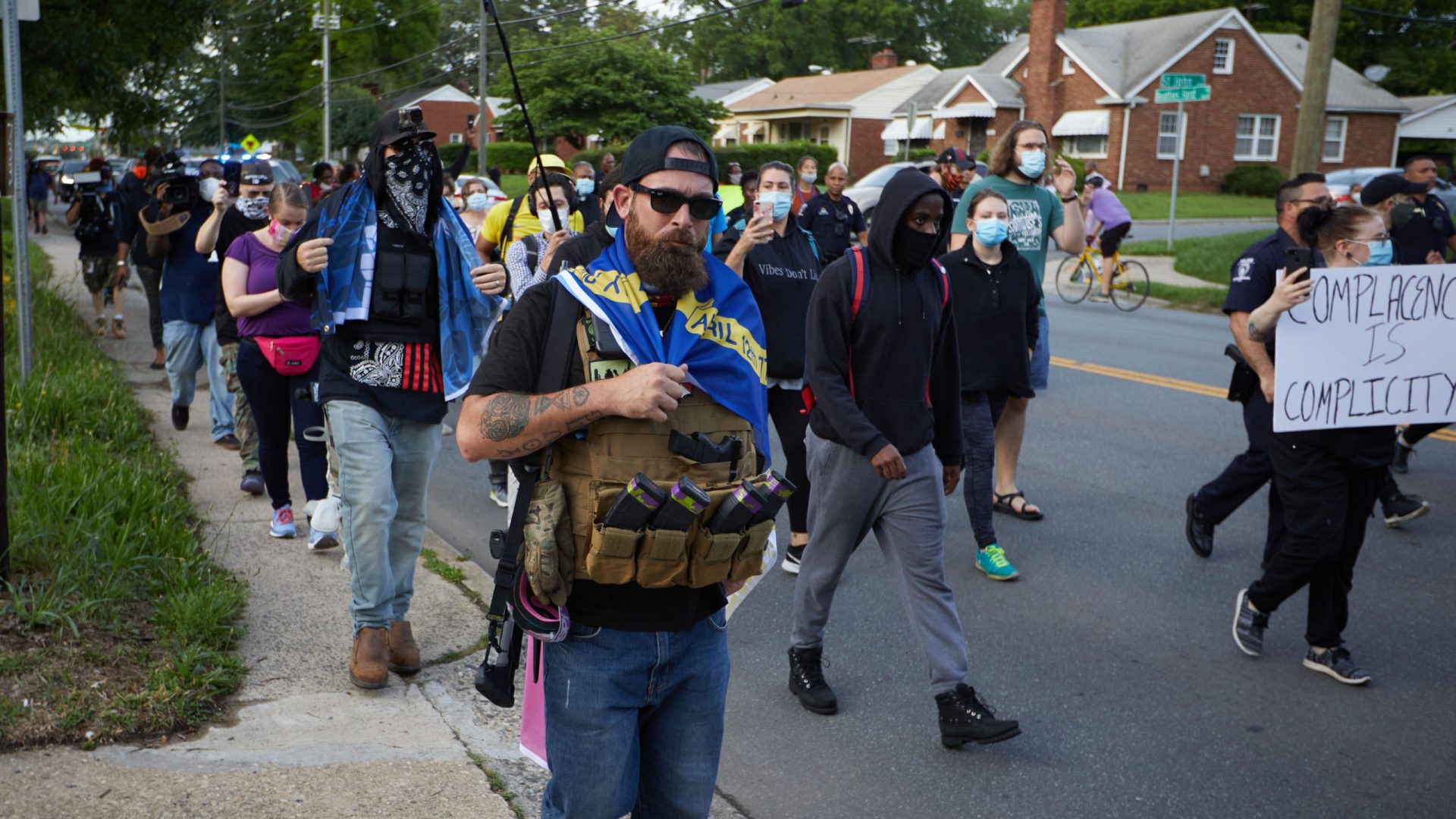






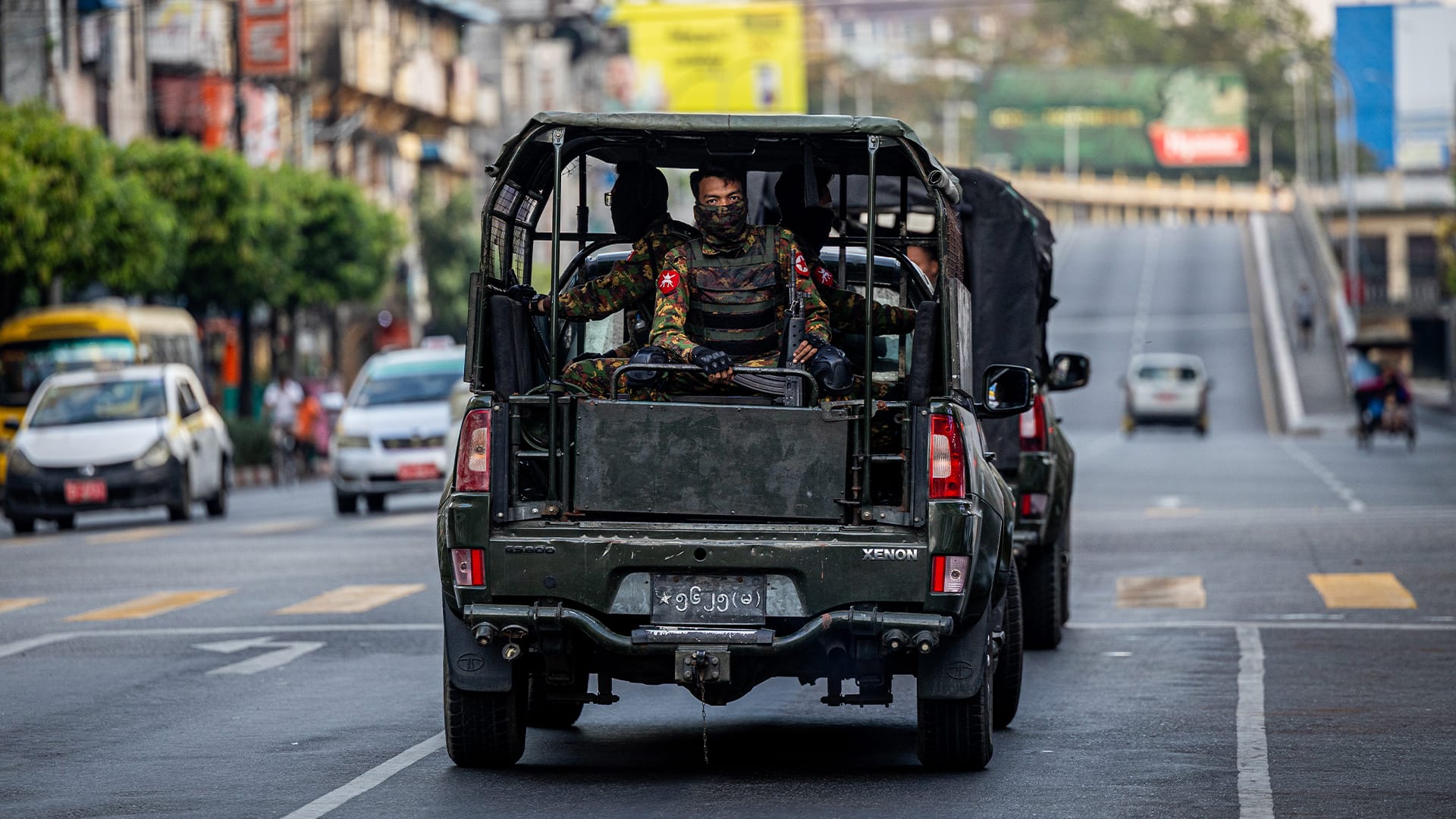
On January 25, Myanmar’s military junta will hold the third round of what it calls an election in the middle of an ongoing civil war. “The election is a farce and everyone knows it,” says Meredith Bunn, founder of a non-profit which provides medical aid inside Myanmar. “It is essentially a hail Mary by the junta,” she told me, “to hold a faux election and claim legitimacy to the world. Unfortunately we’re in such an uncertain period where it may work.”

Subscribe to our Coda Currents newsletter
Insights from the Coda newsroom on the global forces that shape local crises.
The first two rounds, which began last month, have seen the Union Solidarity and Development Party, the party of the military junta, grab a substantial lead, putting it on course to form the next, notionally civilian, government. Only 131 of the country’s 330 townships are holding the elections in full, a further 118 townships are holding partial polls in areas the military controls, while polls in 65 townships have been canceled or suspended because of fighting. Opposition parties, including Aung Saan Suu Kyi’s National League for Democracy, which won the last election in a landslide, have been forcibly dissolved. Criticism of the election has been criminalized.
ASEAN, the 11-nation regional bloc of which Myanmar is still officially a part, has said it will not recognize election results. The United Nations said the election “seems nearly certain to further ingrain insecurity, fear and polarization throughout the country.” And the European Union described the election as a “sham” before it even began. But Myanmar’s military junta does have powerful support. China has propped up the military regime in exchange for access to resources, and the Myanmar election was only announced after discussions between Xi Jinping and Min Aung Hlaing. Election observers include officials from Belarus, Russia, India and Nicaragua. And in September, Hlaing visited Moscow, signing agreements to cooperate on nuclear energy and space exploration, and to protect each other from international justice.
This month, Myanmar’s military was forced to defend its conduct in the Hague, as hearings began at the International Court of Justice where it stands accused of of perpetrating a long-running genocide against the Muslim Rohingya minority. Already, by 2018, as hundreds of thousands of Rohingya fled Myanmar, the United Nations High Commissioner for Refugees had described the situation as “a textbook example of ethnic cleansing.” In 2019, The Gambia approached the ICJ to file a lawsuit against Myanmar, the first filed on behalf of a persecuted people by a third party. The hearings, which have only just started and could take years to conclude, will nonetheless still have implications and set judicial precedents for South Africa’s genocide case against Israel in the ICJ.
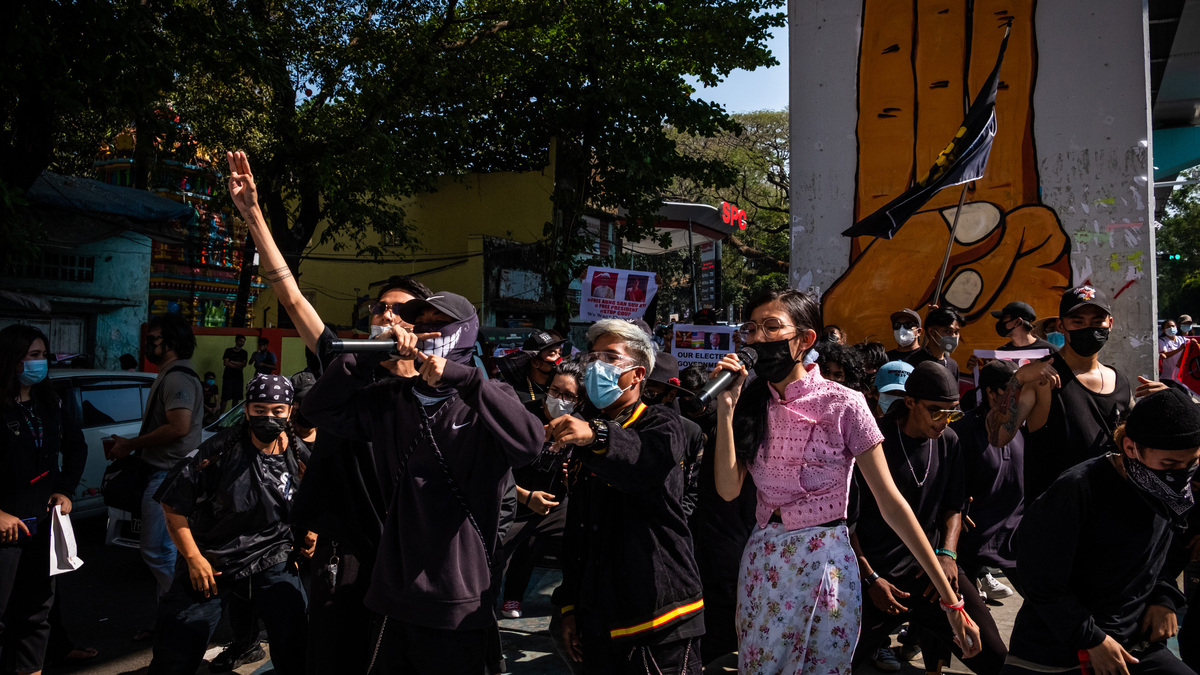
Not that it has stopped Myanmar’s military from continuing to use methods, since deposing the democratically elected government in 2021, such as “arbitrary arrests, torture, extrajudicial killings, and indiscriminate attacks on civilians” that Human Rights Watch said amounted to “war crimes.” Even now, the country is embroiled in bloody conflict. Over 170 armed resistance groups have coalesced to seize 42% of the country. Heavy bombing and artillery fire are commonplace throughout the country. Over 3,5 million people have been displaced into the likes of Thailand and India, 7,700 have been killed by the military, and over 30,300 arrested of which 630 are children.
A local medic from the mountainous Chin State, large swathes of which are rebel-held, told me she had been detained by Myanmar military forces while giving medical assistance to rebels. “My ankles and wrists were chained,” she said, “and wooden blocks were used as restraints.” She was beaten and threatened with sexual assault and said she could smell the dead bodies of other detainees.
This is the backdrop in which Myanmar goes to polls for the final phase of the elections. Despite ASEAN’s rejection of the results, China insists elections are a way out of the civil war and towards stability. In a recent column in the “South China Morning Post”, an analyst argued that “China is the only country with the clout, experience and contacts to talk and make deals with all sides.” Myanmar is a critical supplier of rare earths to China.
Given the transactional foreign policy that has become a cornerstone of Donald Trump’s second term as President of the United States, it’s perhaps not surprising that the White House too has been warming to Myanmar’s military government. As the Trump administration’s actions in Venezuela and acquisitive, imperial interest in both Greenland and Canada show, all relations with foreign countries are seen exclusively in terms of economic and strategic value. Normalizing relations even with Myanmar’s authoritarian regime would be palatable if it delivered access to rare earths and caused unease in Beijing.
Related Articles
The United States, through USAID, played a strong supporting role in Myanmar’s elections in 2015 and 2020 and in 2024 warned about the deteriorating “human rights crisis” in the country. But in July last year, Myanmar’s military leader Hlaing sent Donald Trump a letter complimenting his “strong leadership.” It was a response to a letter from Washington outlining the tariff imposed on exports from Myanmar, a communication that the military junta treated as acknowledgement of its status as the legitimate government. The Trump administration then appeared interested in a dialogue with the Myanmar military junta about access to rare earths. Just weeks later, in what the Trump administration said was a coincidence, it lifted sanctions on individuals and companies connected to the junta.
Also in July, Secretary of State Marco Rubio sent a cable to U.S. diplomats advising them to refrain from criticizing foreign elections as “consistent with the administration’s emphasis on national sovereignty.” And in November, Kristi Noem, the Secretary of Homeland Security, said that Myanmar had “made notable progress in governance and stability” and had “plans for free and fair elections.” It was a remarkable statement of faith in a junta accused of genocide and of overthrowing a democratically elected civilian government, but consistent with the Trump administration’s prioritizing of transactional partnerships over moral principles. From January 26, Myanmar nationals will no longer be eligible for temporary protected status in the U.S., with the Trump administration citing the elections as evidence that Myanmar was safe.
With Russia, China and the U.S. in the Myanmar military’s corner, the implication is clear. The new Great Game is the global tussle for minerals and resources, making Venezuela, Greenland, Canada and Myanmar, among others, the new spheres of superpower hostility.