







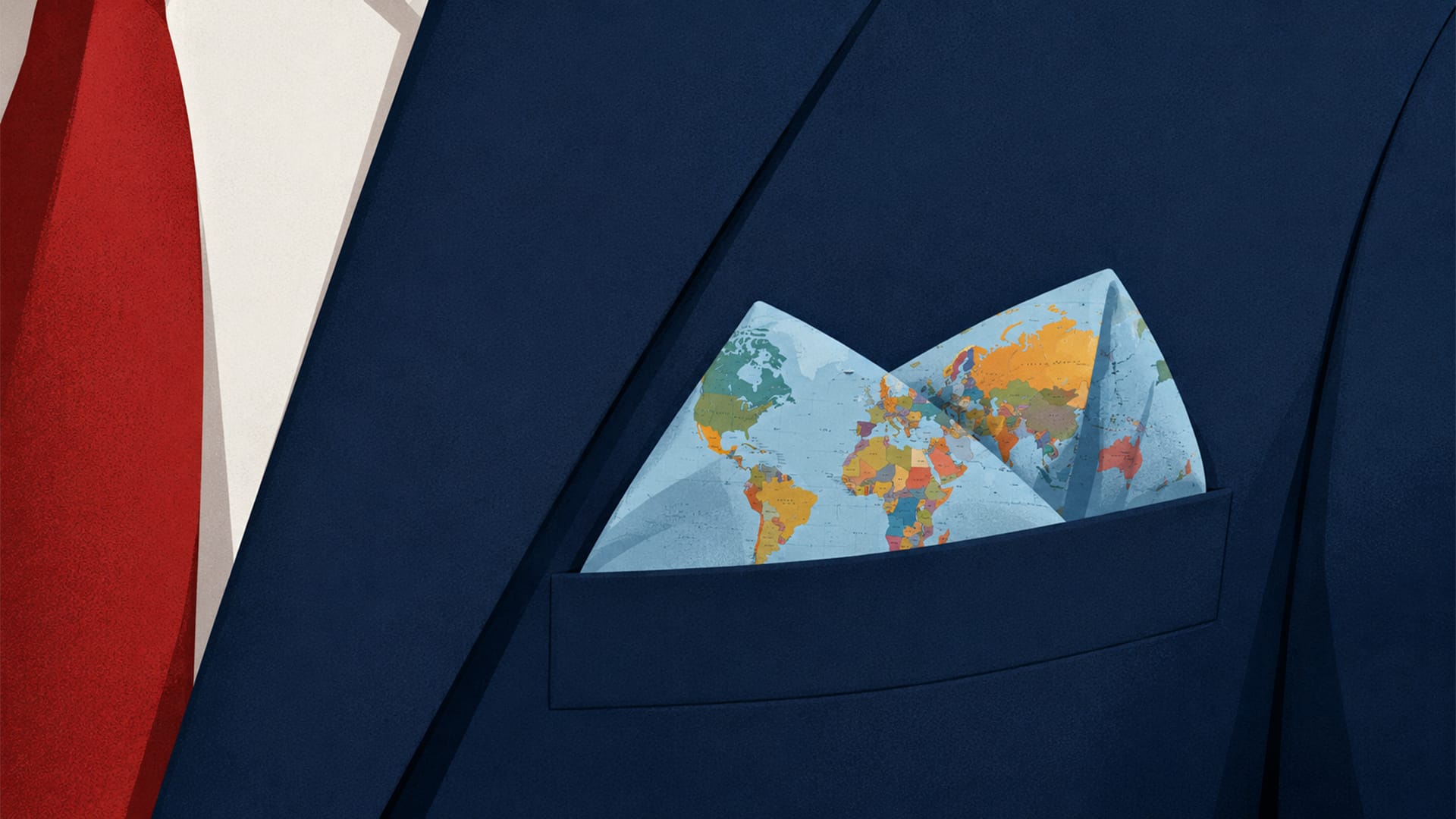
Trillionaires are a national security risk

I’ve been writing this newsletter since 2020, and in my first edition I marvelled at the concept of the centi-billionaire, and the fact there were at the time three people with 11 zeros in their net worth. What a six years it’s been. When I started writing this week’s edition, Elon Musk was a mere David Sun away from becoming the world’s first trillionaire, and now as I’m finishing it, Musk is worth the scarcely conceivable sum of $1.1 trillion. Nothing like this has ever happened before and there is no sign it is going to stop happening. There is no reason at all to suppose that in another half-decade I won’t be writing about how deci-trillionaires are the new thing.

Subscribe to our Coda Currents newsletter
Insights from the Coda newsroom on the global forces that shape local crises.
This increasingly extreme inequality is a challenge for social cohesion, democracy and civilisation that we haven’t seen in modern times, second only to climate change as a threat to our future. Although in some ways, they’re the same challenge, considering the disproportionate share of emissions coming from rich people.
In some ways, if Musk’s wealth seemed to be making him happy it wouldn’t be so bad, but it appears only to make him angrier. I like to think that if I had a trillion dollars, I’d do something more constructive than stir up protests against ethnic minorities.
Reducing inequality is the right thing to do for every reason, not least because it would deprive very rich people of the ability to stoke pogroms anywhere they like. But how to do that? The only thing that has previously reduced inequality to any significant extent has been the 20th century’s series of global conflicts with massive destruction of life and property, and that’s the kind of thing it would be good to avoid.
I think there is a strong argument to be made, however, that the financial trickery abused by the very rich is also bad for national security, and it’s one nicely made here by Matthew McGlynn, who specialises in researching Russia. By degrading the ability of oligarchs to cheat their way to riches, we’d also limit the space of billionaires to dodge taxes and accountability.
It is notable that expert after expert speaking to the House of Representatives Committee on Financial Services about Chinese Money Laundering Networks pleaded for the Corporate Transparency Act to be properly implemented. “When a laundering network operates by scattering its footprint across hundreds of student accounts, dozens of shell companies, and multiple jurisdictions, traditional compliance frameworks may treat flags as isolated, minor incidents. The systemic risk is consistently underestimated, and responses remain heavily reactive,” noted Louis DeTitto.
Related Articles


If first we come for the money launderers, then the billionaires won’t speak out because they’re not money launderers. Also, it would mean we’d do a better job of tackling money laundering, which would be nice.
While on the subject of congressional hearings, there are interesting moves by Senator Richard Blumenthal to probe how Iranian and Russian sanction-dodgers are using cryptocurrencies. In April, he wrote to Binance requesting further information, and now he’s written to Tether asking for information about misuse of its USDT stablecoin.
The details he’s requesting are far-reaching and potentially highly consequential, since they relate to connections with Iran and Russia, including A7, issuer of the leading ruble-denominated cryptocurrency. Perhaps most important, however, is his first question: “What legal jurisdictions does Tether believe it is subject to for USDT, in particular for anti-money laundering rules, reporting obligations, asset seizures, and sanctions compliance? Does Tether believe it is legally required to comply with Department of Treasury sanctions for USDT and issue suspicious activity reports (SARs) to the U.S. government?”
If the U.S. asserts regulatory authority over dollar-denominated cryptocurrencies as it has over all transactions in dollars then that would significantly undermine their attractiveness to illicit actors, and also do a lot to reassure people like me. Tether, meanwhile, has been bigging up its cooperation with law enforcement agencies, and says it’s frozen $450 million globally.
“For the past few years, stablecoins have come to dominate the landscape of illicit transactions, and now account for 84 percent of all illicit transaction volume,” concluded Chainalysis in 2026’s crypto crime report. It estimated total illicit transactions at $154 billion last year, so the stablecoin share of that was almost $130 billion. That is a fraction of the amount of money laundering estimated to move through either the trade system or indeed the formal financial network, but still a lot of money. It’s interesting to see, however, how Chainalysis still holds out hope for well-regulated cryptocurrencies helping to solve problems caused by standard finance.
“Stablecoins and on-chain settlement mechanisms in particular offer low-cost, borderless avenues for remittances, payments, and savings,” Chainalysis said. “If coupled with sound regulation and inclusive policy frameworks, these tools could help governments leverage crypto not just for resilience, but also for broader financial inclusion as part of economic recovery.”
Seeing will be believing.
A version of this story was published in this week’s Oligarchy newsletter. Sign up here.