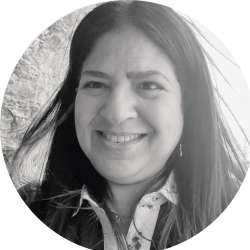

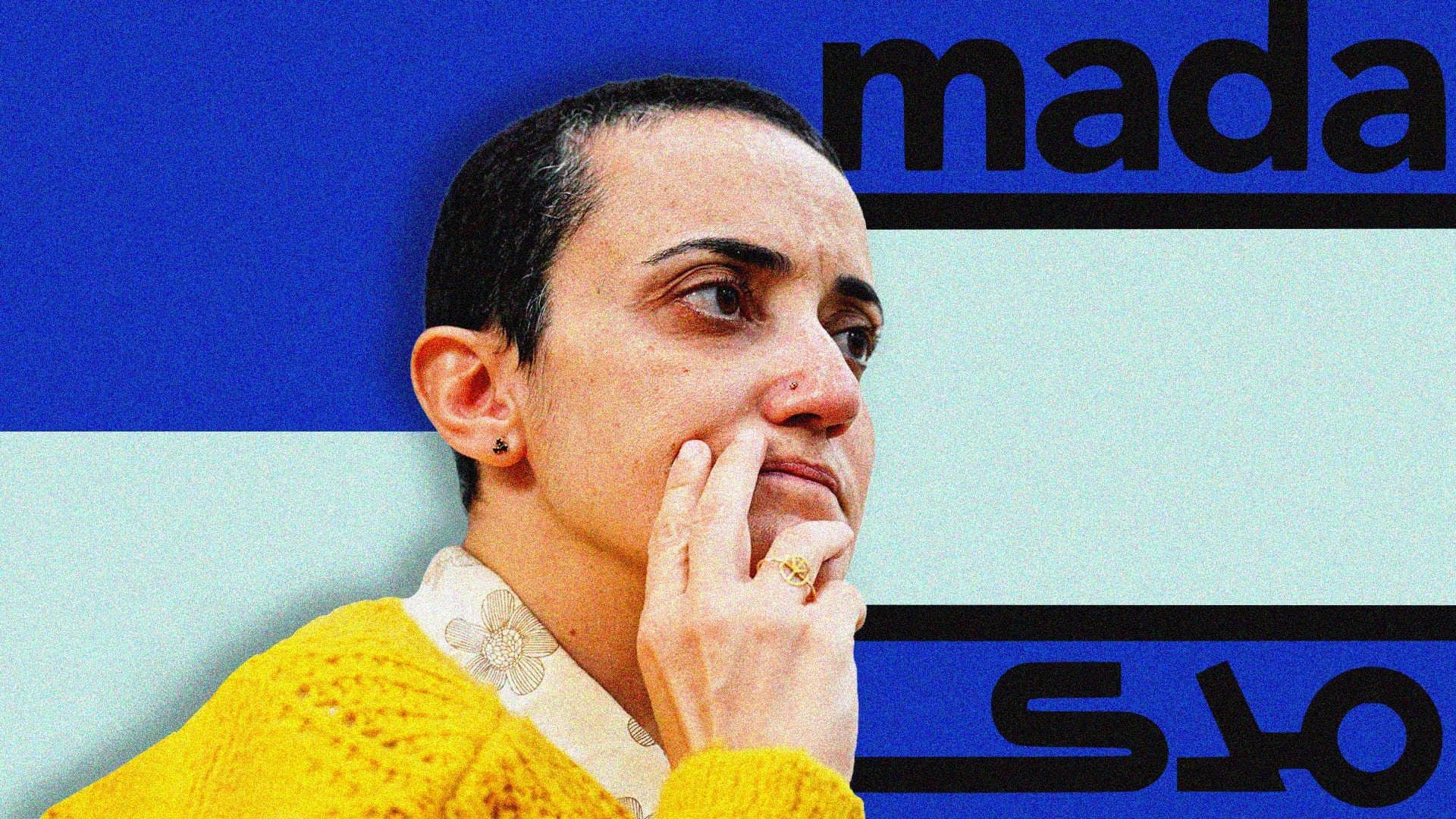
Lina Attalah, the co-founder and editor-in-chief of Mada Masr, arguably Egypt’s leading independent newsroom, was wearing a white shirt with a floral print. At one point, as we spoke, she got up and opened the window. A willow tree stood outside, and I thought of how rooted we both are in this place. She laughed often. Small, nervous laughs. In late-September, six journalists, the entire editorial team of the fact-checking website Matsadaash, were arrested on charges of spreading false news. They are still in detention.

Subscribe to our Coda Currents newsletter
Insights from the Coda newsroom on the global forces that shape local crises.
And on October 27, the New Cairo Misdemeanor Court convicted Lina of managing an unlicensed website, fined her three million Egyptian pounds (about $54,000), and ordered Mada Masr to shut down its operations. After the verdict, she learned that she had been sentenced in absentia in 2024 to a year in prison for spreading false news. She will be retried on that charge on November 11. Separately, the appeal against her fine and the shutting down of Mada Masr will be heard on November 25.
Lina and I have been friends and colleagues for nearly two decades, and built Al-Masry Al-Youm’s English edition together. I spoke to her twice in the days after the verdict.
What do you think is behind the case against you and Mada Masr? Is it just a legal matter?
For the past few days we have seen a repeated message that the media is the enemy, that the government is doing important work and the only obstacle in its way is the media. I think they are acting on this message, and it has translated into the arrest of the Matsadaash team as well as what happened to us. So no, it’s not just a procedural matter. It feels like a political crackdown. The sad thing is that common sense says we are not really the problem. You can persecute us, but the problems will still be there.
Was there anything that surprised you about your trial?
We have always had issues with the authorities. We went through prosecutions and interrogations, but this was the first time we faced a trial, and it lacked the basic elements of a fair trial. There was an excess of violence, psychological and even physical. I was not tortured or anything like that, but there was mistreatment that I found really unnecessary.
Does what is happening still shock you?
I continue to be shocked. And I think it’s a good thing to be surprised, because it means I still have hope that somewhere in the system there is wisdom: a judge here or a politician there who will say, “This is not necessary.” It has been madness these last days, not just for us but for our colleagues at Matsadaash. I’m shocked because I still believe this is a country that should have people who can stop this madness.
How is the Mada Masr team doing?
Afraid, anxious. When we are this scared, we can’t do the work of journalism itself. So we focus on caring for each other, because care is work too.
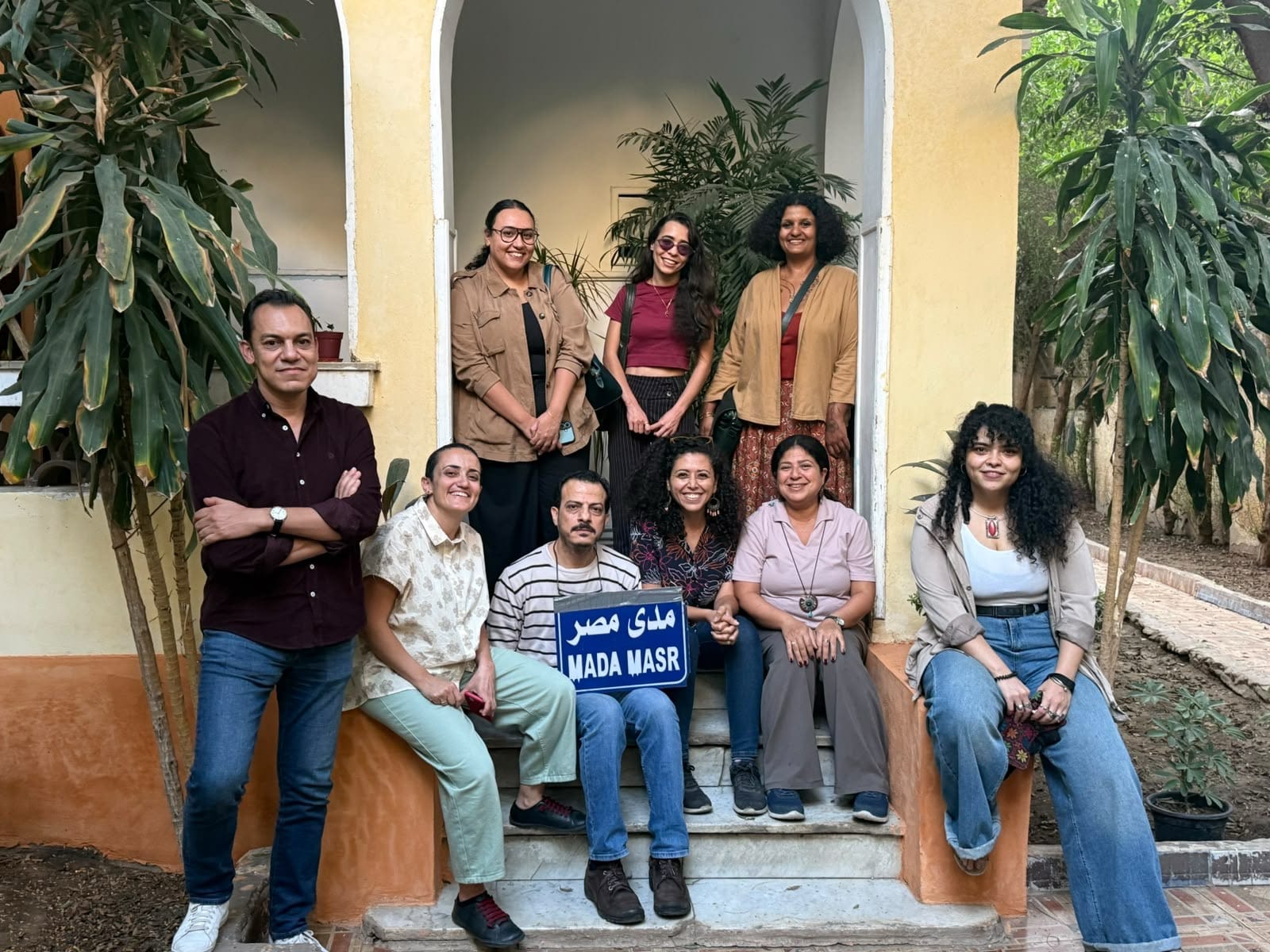
When Mada Masr recently joined eight Egyptian and Arab outlets in a joint newsroom to fact-check a government conference in solidarity with Matsadaash, what did you tell your team?
We explained that this was something we needed to do. We don’t usually take part in solidarity campaigns. We see ourselves as professional journalists, not activists; whatever commitment we have goes into our journalism. But this is a moment when our own existence is at stake. So taking a stand is also for ourselves and for the practice of independent journalism. That was the message: it was necessary, particularly at this moment.
The court ordered Mada Masr closed. How are you still here?
We are still appealing, so we still stand a chance. Honestly, I hope the issue is eventually resolved by opening up the licensing process for independent media, so that it is no longer used as a tool of control and repression. Even if we lose the appeal, we will apply for another license, and I hope the government will have enough wisdom to accept it and let us work. I’m hopeful.
Egypt’s Supreme Judicial Council said in a statement that you waived your right to appeal in writing. What do you say to that?
It was a surprising statement. Of course I did not give up my appeal. Our behavior has always been to use the law as much as possible, to legalize our situation and win our right to operate legally. The last thing I would do is give up my right to appeal. We are very focused on the next session, hoping the verdict will be reversed. We still want to say that we trust the legal system, so much so that we use it to get our protection and our rights.
What do you expect on November 11?
I don’t know what to expect. The day of the verdict was a rough day at court. There is a one-year prison sentence against me. I really hope the charges are dropped.
And if the closure order stands?
Apply for a new license. Knock on all doors. Try to survive.
You have always been one to try new things. Is it time to look at other ways of publishing?
It’s a difficult question. I think a crisis has to push us to think about something new. But my feeling right now is that what we have is good and needs to continue. It needs to evolve, touch more lives and train more people. So, to be honest, I’m interested in looking for a way to continue.
Why do this work at all?
Because we deserve better information. We deserve better journalism. As a people, we deserve to be informed. Egyptians had a chance to learn more about what was happening when there was a brief opening in the media landscape after the 2011 revolution [which ended the 30-year autocratic rule of Egyptian president Hosni Mubarak]. Now that everything is shut down, people are frustrated and don’t know where to go. The project of Mada Masr and the other independent outlets has always been to respect this need and the intelligence of the reader, who can’t just be force-fed state-engineered messages.
Why should this matter to people outside Egypt?
Because the whole world is struggling with independent information and freedom of expression. Even in the democracies that work best, we have seen serious limits put on free expression. It’s a global issue.
Looking at your field today, what still surprises you?
That independent journalism is endangered like never before, and not only by authoritarian regimes but also by corporate control. And even more, how democracies elsewhere have less and less tolerance for truly independent media. It is endangered everywhere, at an unprecedented level.
How do we use this crisis to stand together?
By talking about it, and by putting it in the context of what is happening in Egypt, in the region and in the whole world. I don’t only mean far-right politics spreading everywhere, which has been a trend for years. We are also living in a world after the Gaza genocide. It is a world where the truth has become such a casualty in the political calculus that so much violence has gone on with such impunity. We stand by people’s right to know the truth, to be affected by it and to stop such impunity. That’s why independent journalism matters.
Is there such a thing as independent media anymore?
There are small and mid-sized newsrooms doing important work everywhere in the world, and we are connected to them. That’s the great thing about professional solidarity: realizing there is a vocational tie with so many newsrooms trying to do this work despite the algorithms, despite the money and despite state control. We are not the most dominant, but a certain power is being built across these newsrooms, and I believe in it.
What keeps you grounded when the pressure mounts?
Community support, which rests on the journalism we’ve been doing, and the fact that people appreciate it. The massive support and solidarity remind us that we are being punished for a reason, and that is a reason for the work to survive. It gives us power somehow.
Related Articles
You said this is a chance to tell the story of independent journalism in Egypt, which is also the story of Egypt. What do you mean?
In the last few years the political environment in Egypt has been lifeless. Yet independent media has done formidable work and kept a record of these difficult years. That work didn’t come out of nowhere. There are small and medium-sized newsrooms thinking together, editing and training the young people who come to us. It’s a beautiful vocational story and an important part of this country’s story. This is a good moment to stop and learn about it, because I think it can inspire our society too.
You could have lived anywhere. Was it the right choice to stay in Cairo?
These stupid days when we go to court, get pushed around and get scared, days that leave some bitter traces, are nothing compared with all the other days when we work together and publish. Every time a young reporter starts with us and, over the years, becomes a star reporter, it’s a great source of gratification. This place has graduated so many fantastic people. There’s so much meaning, so much joy, so much politics and so much possibility that it makes perfect sense.
What do you hope comes out of this?
For Mada to grow. To be a safe space. To attract more young people who still want to be journalists, to do good stories, to learn new things, and to be the new reality of journalism in the world.
Tomorrow (Wednesday, November 11), Lina goes back to court to learn if her sentence will be upheld. I’ll be there, with her and with all of us who chose the craft of journalism and want to keep practicing it.
This story was published in collaboration with Egab.