

Few leaders around the world can claim to win elections more emphatically than Vladimir Putin. North Korea’s Kim Jong Un, whose party in March picked up over 99% of the vote from over 99% of the electorate, is one. Another is Ramzan Kadyrov, leader of the Chechen Republic, who in September was re-elected for a fifth term with 99.85% of the vote, up from 99.7% in 2021.
Kadyrov was re-elected at the same time that United Russia, the pro-Putin party, won a record mandate in the first election since the invasion of Ukraine in 2022. The country’s only anti-war party was blocked by court order from participating. As Russia is Putin’s fiefdom, so the Chechen Republic, nominally a part of the Russian Federation, is Kadyrov’s, with Moscow’s only demand being fealty. In exchange for that loyalty to Putin, the Chechen dictator gets to do what he likes, particularly to dissidents whom he routinely jails, tortures and kills, say human rights organizations.
It could have been different. In 1991, amidst the collapse of the Soviet Union, there was a Chechen revolution, leading to a partial breakaway and the creation of the Chechen Republic of Ichkeria. Recognised by no one except neighbouring Georgia, the rebel republic, led by Dzokhar Dudayev, managed to hold Russia at bay. The First Chechen War (1994 – 1996) ended in a stalemate, with Russian troops departing only to re-enter in 1999, sparking nearly a decade of conflict which ended with Chechnya back in the Russian fold and Kadyrov, whose father had switched sides to support Putin, bankrolled by the Kremlin and able to crush the opposition.
Akhmed Zakayev was the Minister of Culture in Dudayev’s rebel government back in the early 1990s. Tall, grizzled, charismatic, he is the closest thing there is to political continuity with the Chechen Republic of Ichkeria. Now in his mid-sixties, the self-declared Prime Minister of Ichkeria’s government-in-exile seems an unlikely threat to Vladimir Putin’s imperial pretensions. Nonetheless, in September, as Kadyrov claimed his election victory in Chechnya, it was reported that Zakayev was the target of a Russian assassination plot.
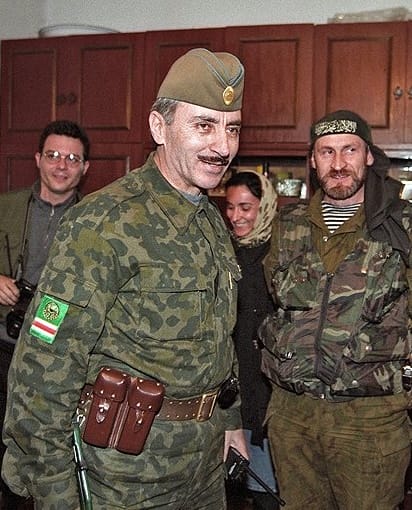
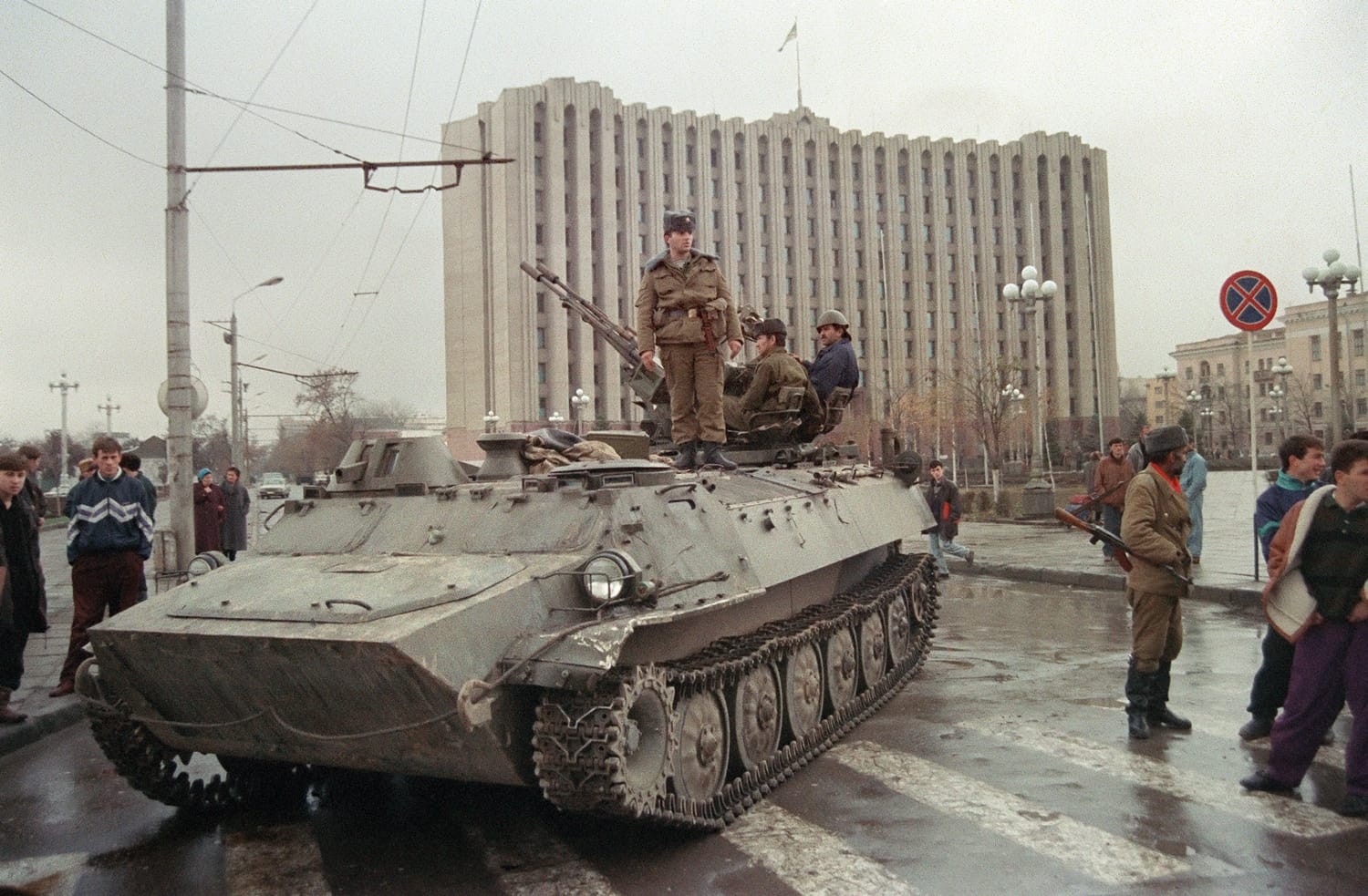
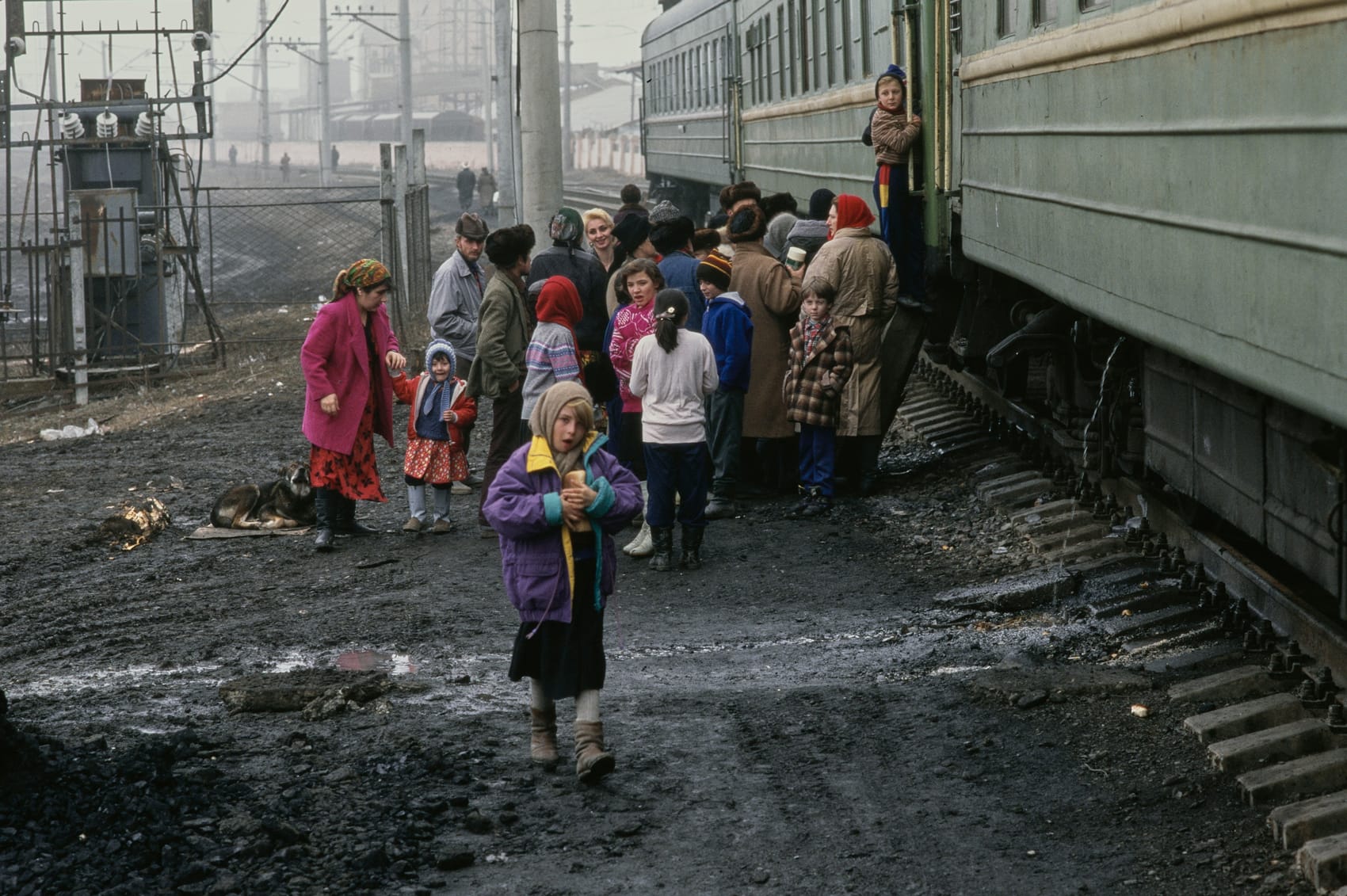
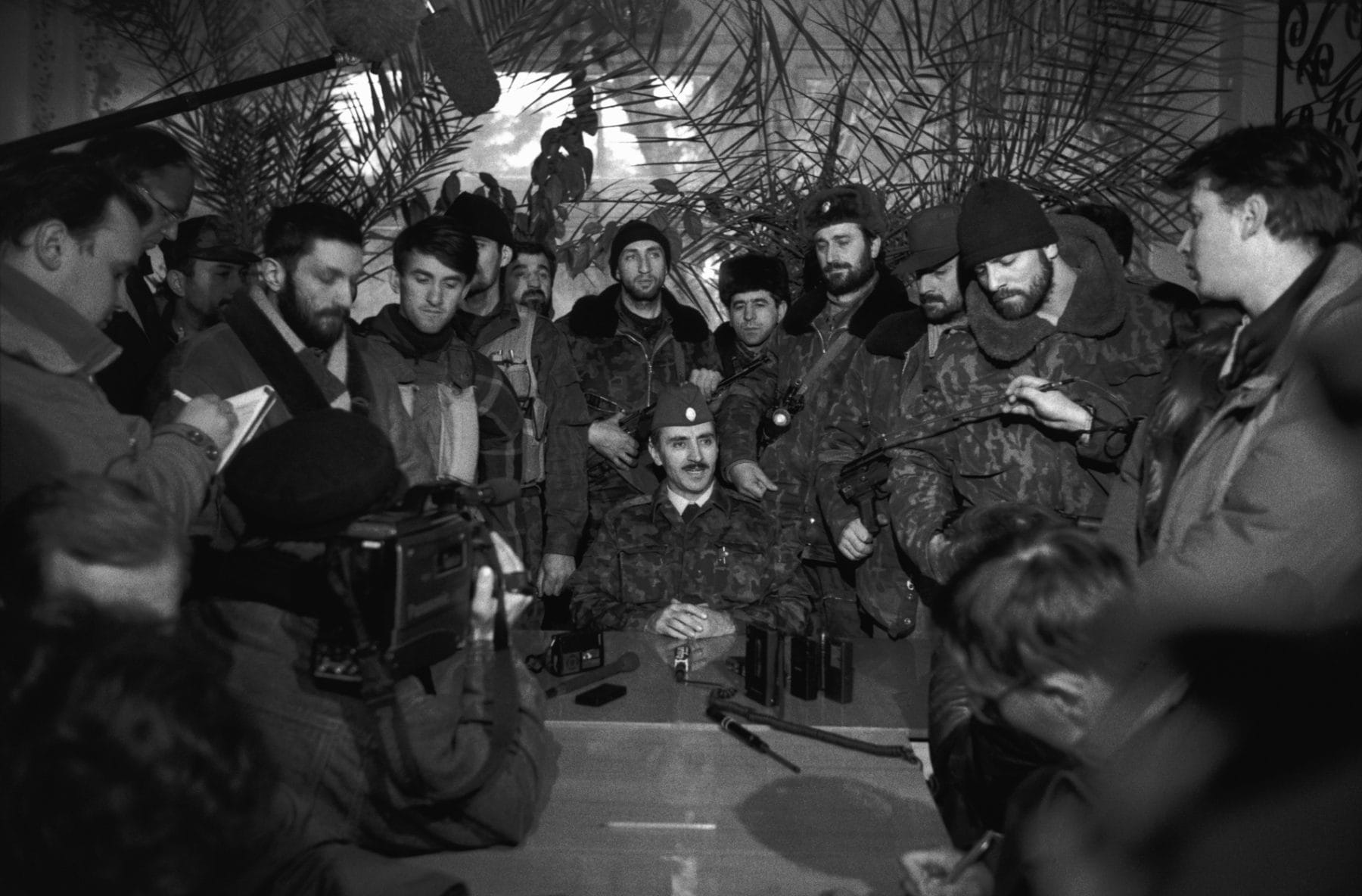
Bottom: Dudayev addresses the Chechnyan media in January of 1995. Peter Turnley/Corbis/VCG via Getty Images.
Months earlier, in March, this alleged plot was foreshadowed in a story about the arrest of a Russian agent in Colombia. He had been stopped at an airport at the behest of U.S. authorities, leading to the uncovering of a squad of assassins that had been formed in December 2022 and tasked with killing Putin’s opponents around the world. Among the highest priority targets were Zakayev and his family.
The Kremlin’s fixation on Zakayev was also evident in April, 2026, when the Russian Foreign Ministry accused Germany of threatening national security after a German official met with him in Kyiv.
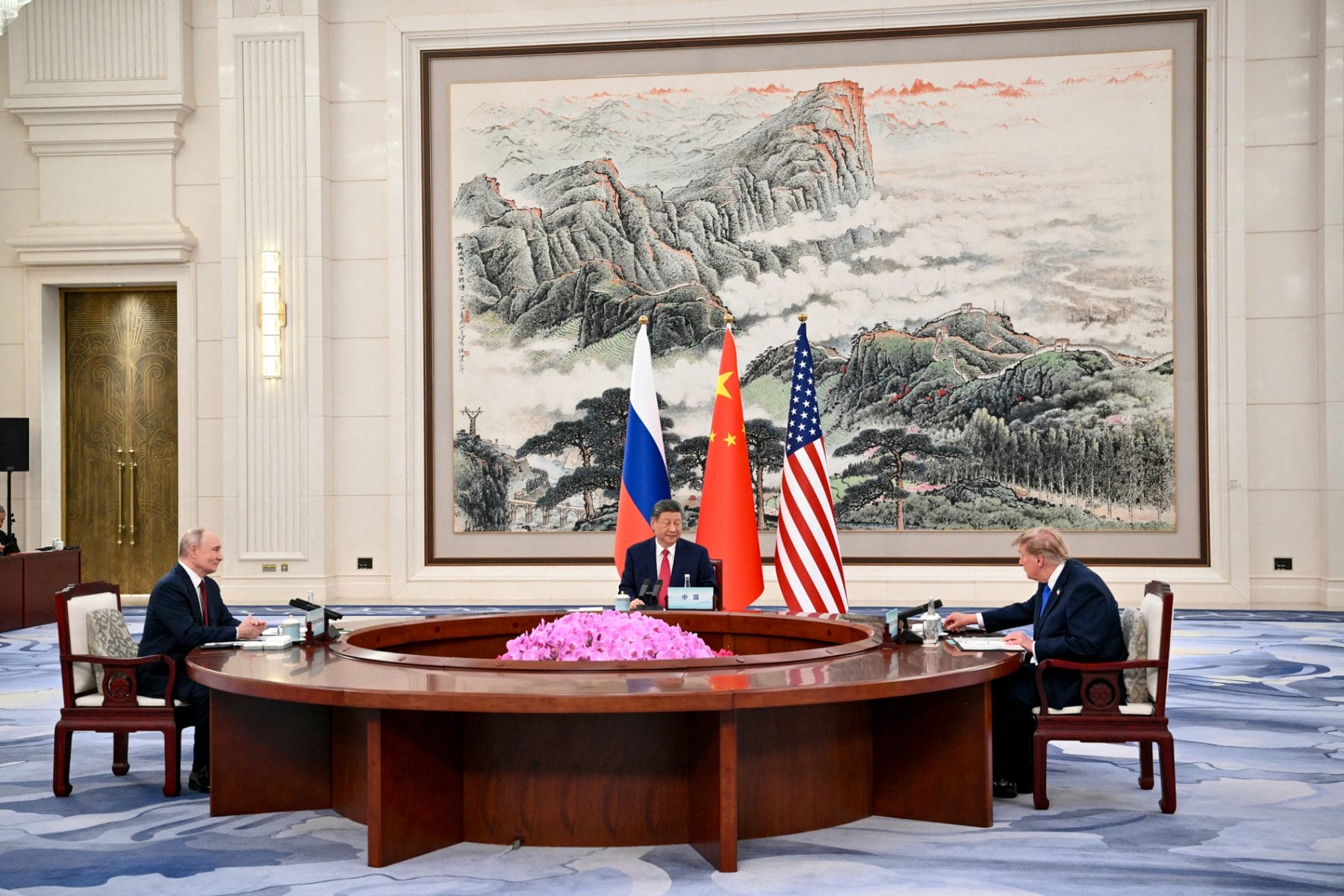
Watching Putin fraternise in Shenzhen, China with Xi Jinping and Donald Trump, ahead of a trilateral summit on November 19 that appeared to be a self-conscious reprisal of the Yalta Conference, with the Big Three carving up the world between them, you could understand why a figure like Zakayev represents a threat — his life represents a rejection of great power politics, and the questioning of Russia’s notions about its own sovereignty.
A Chechen resistance
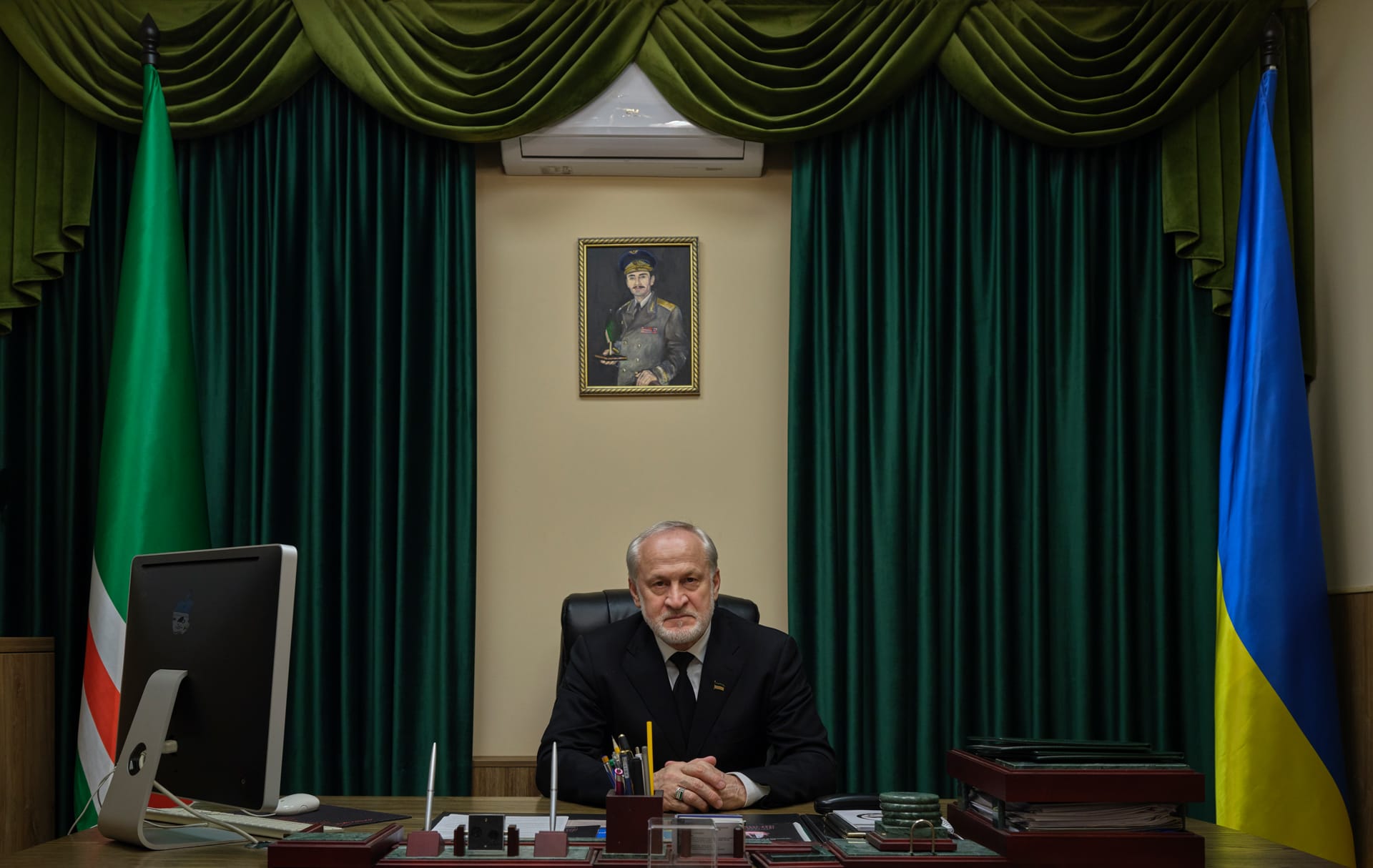
In March, before word of the assassination attempt came to light, I met Zakayev in his office in Kyiv. A portrait of Dzhokhar Dudayev in military uniform stares down at us from a wall.

Subscribe to our Coda Currents newsletter
Insights from the Coda newsroom on the global forces that shape local crises.
He is in Kyiv to visit OBON, a company of Chechen and other fighters from the northern Caucasus that he established in 2022 to support Ukraine’s defence against Russia. It is Ramadan and when I offer to pour him a glass of water, he shakes his head and tells me he is fasting. Just weeks after our meeting, a court in Grozny, the Chechen capital, declares his Ichkerian liberation movement a terrorist organization. But in his office, framed by deep green curtains and the Ichkerian flag, he has the air of a statesman. Never mind that the state now exists only in the hearts and minds of an exiled diaspora.
Kadyrov may be at death’s door, yet Chechnya remains firmly in his grip and his 18-year-old son is apparently being fast-tracked up through the military ranks as a possible successor. Still, alongside the war in Ukraine, Kadyrov’s health is a subject of conversation about the future. Could his death reopen questions about a Chechnya free of Russia? “Independence is not an end in itself,” Zakayev observes. “It is a question of freedom. It is a question of survival, a question of safeguarding the integrity and security of our people.” He has good reason to be concerned about the survival of Chechens. “In 1944,” he says, “the entire nation was deported to Central Asia.” The forced resettlement, codenamed “Operation Lentil,” ordered by Joseph Stalin and enforced by the NKVD, his secret police, led to deaths of about half a million Chechens and Ingush by some accounts — about one third of their entire population. Zakayev, like nearly all Chechens his age, was born in Kazakhstan, a child of the deportations.
The First Chechen War was responsible for the deaths of another 50,000 civilians. Soon after the start of the Second Chechen War in 1999, Zakayev was injured in a car crash. In 2002, he relocated to the UK to recover, where he was arrested soon after — subject to a Russian extradition request. Oscar-winning actor Vanessa Redgrave paid Zakayev’s bail to keep him out of prison while his case was heard. Eventually, he was granted political asylum in the UK in 2003. From afar, he watched as the Chechen resistance fractured into hardline Islamist and more moderate strands, with the former winning out. Since then, Zakayev continued to draw attention to Russian war crimes, and to advocate for the formation of an independent Ichkeria — positioning himself as a moderate voice for the region.
Portraits of the martyrs of the Chechen wars stretch across the wall of the conference room in his Kyiv offices. “The Chechens have been fighting for their independence for centuries,” he says, “At least 400 years.” The peoples of the northern Caucasus, he adds, put up some of the fiercest resistance to the expansion of the Russian empire, and were hence the victims of some of the most brutal subjugation, a people who between 1930 and 1952 were effectively disappeared. Zakayev says when he set up OBON, he filled it with veterans from the Chechen wars and men from across the region, some of whom had fought in the Syrian civil war and some who had never taken arms.
OBON is not the first Northern Caucasian unit of its kind. In 2014, the Sheikh Mansur — named after an 18th century Chechen Muslim warlord who resisted Russian expansion into the Caucasus — and Dzhokhar Dudayev battalions supported Ukrainian troops in the Donbas. In 2022, ethnic Dagestanis volunteered for a battalion named after the 19th-century Dagestani religious leader Imam Shamil, to fight for the Ukrainian cause. Foreign fighters make up 2% of the Ukrainian armed forces, approximately 20,000 troops. Of these, the northern Caucasian troops make up a small but committed faction.
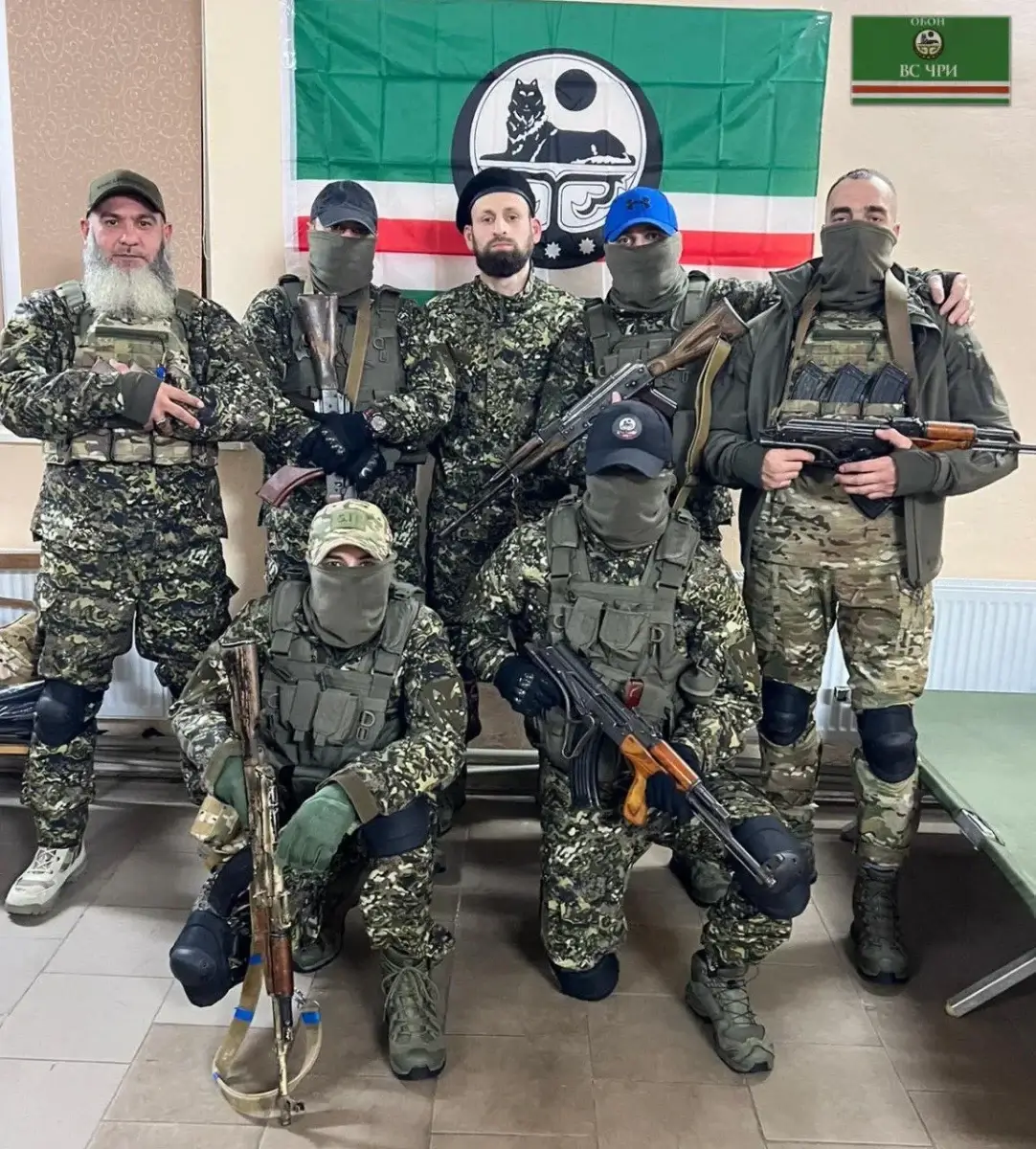
For Zakayev, victory for Ukraine is an existential need. It would give impetus to his Chechen struggle, make it suddenly seem possible. “We will change the situation in Chechnya,” he tells me, “as soon as the situation changes in Russia. And Russia can only change after a military defeat in Ukraine. That is why we are here today.”
He speaks with conviction about his vision for a future Ichkeria: a democratic, secular, and Western-facing nation, “a place governed by the rule of law.” But there are others, like the hardline Islamist Dzhambulat Suleymanov, who leads his own Ichkerian independence movement from exile in Paris and who promotes a vision of a Chechnya free of Russia and ruled by Sharia law.
Since the full-scale invasion of Ukraine, national liberation movements have gained support and enthusiasm throughout the north Caucasian diasporas. “We have established a political platform: the Committee for the Restoration of the North Caucasus States,” says Zakayev. “This includes the Chechen Republic of Ichkeria, Ingushetia, Dagestan, Kabardino-Balkaria, and Circassia.” The committee, he explains, is intended to both raise awareness for their joint cause and to lay the groundwork for future intergovernmental relations should they succeed in attaining independence from Russia.
He imagines this future Federation, he tells me, as harking back to the Mountainous Republic of the North Caucasus, a short-lived state that flared into being in 1917 and was extinguished by 1919. Zakayev’s federation, though, he says, would be NATO-aligned, a strategic bulwark. “I am convinced” he says, “that if the Caucasus as a whole is liberated, it will serve as a buffer zone between Ukraine and the rest of Russia.”
Freeing captive nations
It is nearly five years since Russia’s full-scale invasion of Ukraine, and nearly 12 since Russia’s annexation of the Crimean Peninsula and outbreak of hostilities in the eastern Donbas region. Russian casualties vastly outnumber Ukraine’s, with more than 400,000 killed, and another million injured. A disproportionate number of Russian casualties are not ethnically Russian. Buryats, Tuvans and Altai, people largely of Mongolian and Turkic ethnicity, and minority groups in the Arctic have suffered casualties at 10 times the national average, often being assigned to high-risk assault or disposable “diversionary reconnaissance” units.
Zakayev had referred to this fact as essentially a form of ethnic cleansing. Although sympathy in Ukraine is limited, as on paper Russian soldiers deployed in Ukraine must willingly sign a contract, there is evidence that a silent, forced mobilization has been underway for some time.
On Khreshchatyk, Kyiv’s main drag, I meet Yaroslav Yurchyshyn, a member of the opposition Holos party. Imposing Stalinist buildings loom on either side. In August 2023, the Verkhovna Rada (Ukrainian Parliament) established a special commission to develop a state policy towards the indigenous peoples of Russia, with Yurchyshyn as its head. Ethnically Ukrainian, he grew up in the Russian region of Karelia, near Finland.
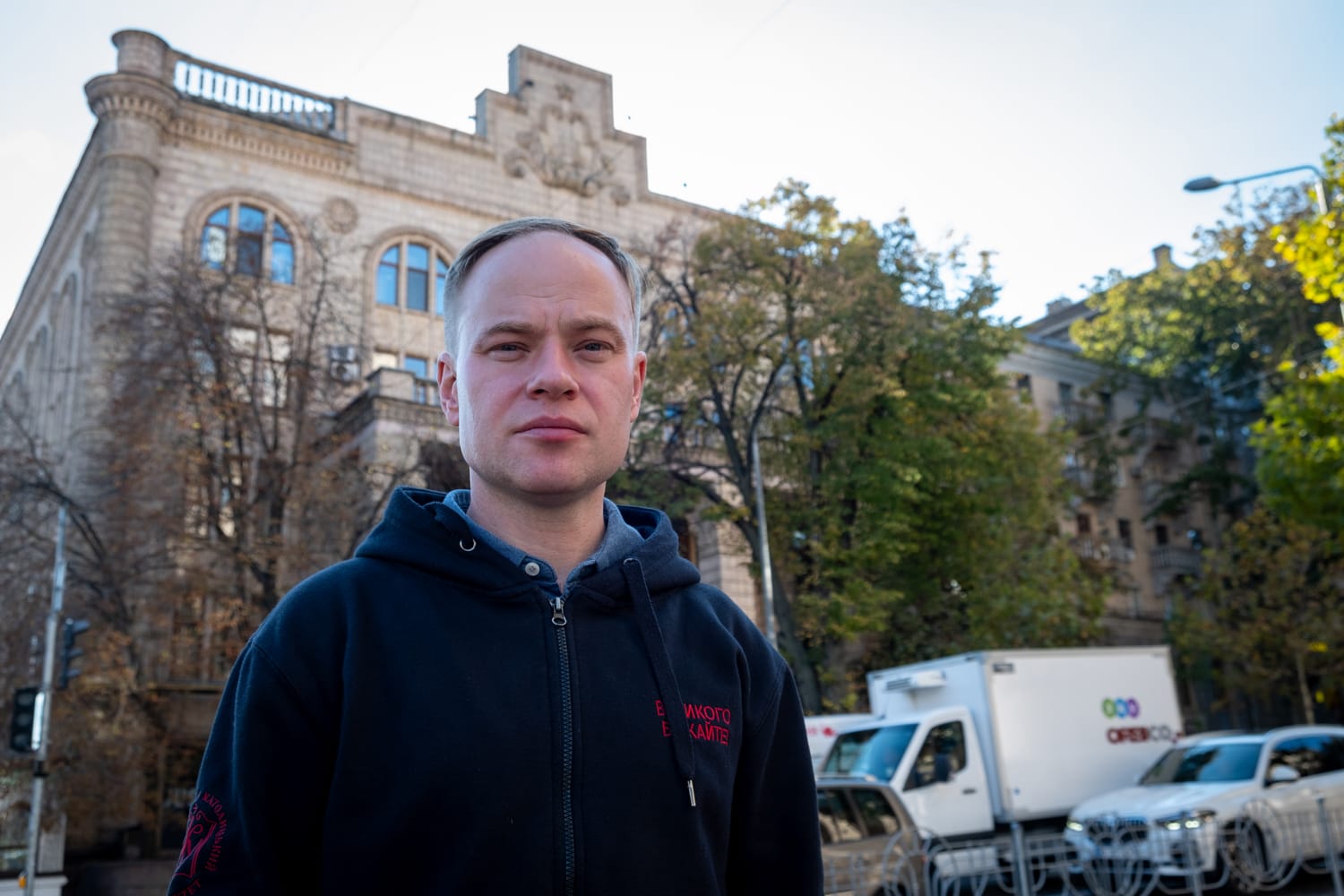
He says that Ukraine has become a natural hub for activists from national liberation movements: “If they come to us and say, ‘I must escape Russia because I will be killed for my activities,’ we give them the possibility to live here. Not only to fight here, but to live here. Because less than 30 years ago, Ukrainians were in the same situation.” In October, 2022, the Ukrainian parliament officially recognized the Chechen Republic of Ichkeria as occupied by Russia and the Chechen people as victims of a genocide.
Yurchyshyn sees the core goal of the commission to advocate for and to build visibility for indigenous peoples in the international political sphere. He points out that the European Parliament has historically only dealt with ethnic Russian opposition politicians. In April 2024, the Parliamentary Assembly for the Council of Europe adopted a resolution that the “decolonization of the Russian Federation is a necessary condition for the establishment of democracy in the Russian Federation.”
However, while the resolution acknowledged the forced russification of these indigenous peoples, and the disproportionate toll that the war has had on their communities, what exactly is meant by “decolonization” is left ambiguous. In 2024 when she was prime minister of Estonia, Kaja Kallas, currently the EU’s top ranking diplomat, argued that the Russian Federation was “many different nations”. Defeat, she said, might mean “you would have more small nations, it’s not a bad thing if the big power is much smaller.”
Some of Yurchyshyn’s work with the commission, he says, is about preparing for a “post-Russia” scenario. He says that leaders based in or visiting Ukraine are receiving “crucial experience for their future state building.” He offers Zakayev as an example. Zakayev visits Ukraine frequently, Yurchyshyn says, and “we collaborate with him to understand how to create policy for a Northern Caucasian Republic”.
It isn’t Ukraine’s duty, Yurchyshyn says, to help create “proto-armies” for an insurgency, nor to interfere. “What happens in the northern Caucasus,” he insists, “must be decided by the nations of the northern Caucasus.” He looks out the window towards the Maidan, where tens of thousands of flags flicker in the wind. Each marks a life lost in the war. “We don’t have the right to decide what Russia will look like in future, but we do understand that we must give captive nations a voice in this process.”
After Yurchyshyn, I met with academic Valerii Pekar. He told me he had “permanent déjà vu now” – that Russia today deeply resembles the final years of the USSR. Pekar runs an organization called “Decolonization” and has made the case internationally for what is effectively the break up of Russia. We’re in Kyiv’s Old Town. Pekar is seated in front of St. Michael’s Cathedral, its gold cupolas floating in the dusk.
The air raid siren begins as he describes a hypothetical scenario: the newly independent Siberian state of Sakha is doing booming trade with its neighbours, without the interference of Moscow. “It is potentially one of the richest countries in the world,” he says. “Because it has everything: oil, gas, rare earths, diamonds.” There is a shattering boom overhead as a Russian drone is intercepted. He barely pauses to acknowledge it.
The consequences of Russian defeat
Despite the scenarios Pekar draws up, it remains a delicate political dance for the Ukrainian parliament. For the Ukrainian government to actively sketch out the collapse of the Russian Federation could risk demonstrating that Ukraine and its European allies are doing what the Russian establishment says it has always done: seeking to accelerate, if not cause, the destruction of Russia. It is a self-fulfilling prophecy of sorts: in Russia violating its neighbor’s sovereignty, it has opened up questions about the inviolability of its own borders.
The American political scientist Alexander J. Motyl has written that not thinking about the “consequences of defeat for Russia” betrays “a dangerous lack of imagination.” Pekar says that if Western powers don’t prepare for Russia’s collapse it will only increase the likelihood of a “bloody and chaotic” balkanization. When we part ways, much of Kyiv is without power. I begin the walk home in darkness, surrounded by the roar of generators.
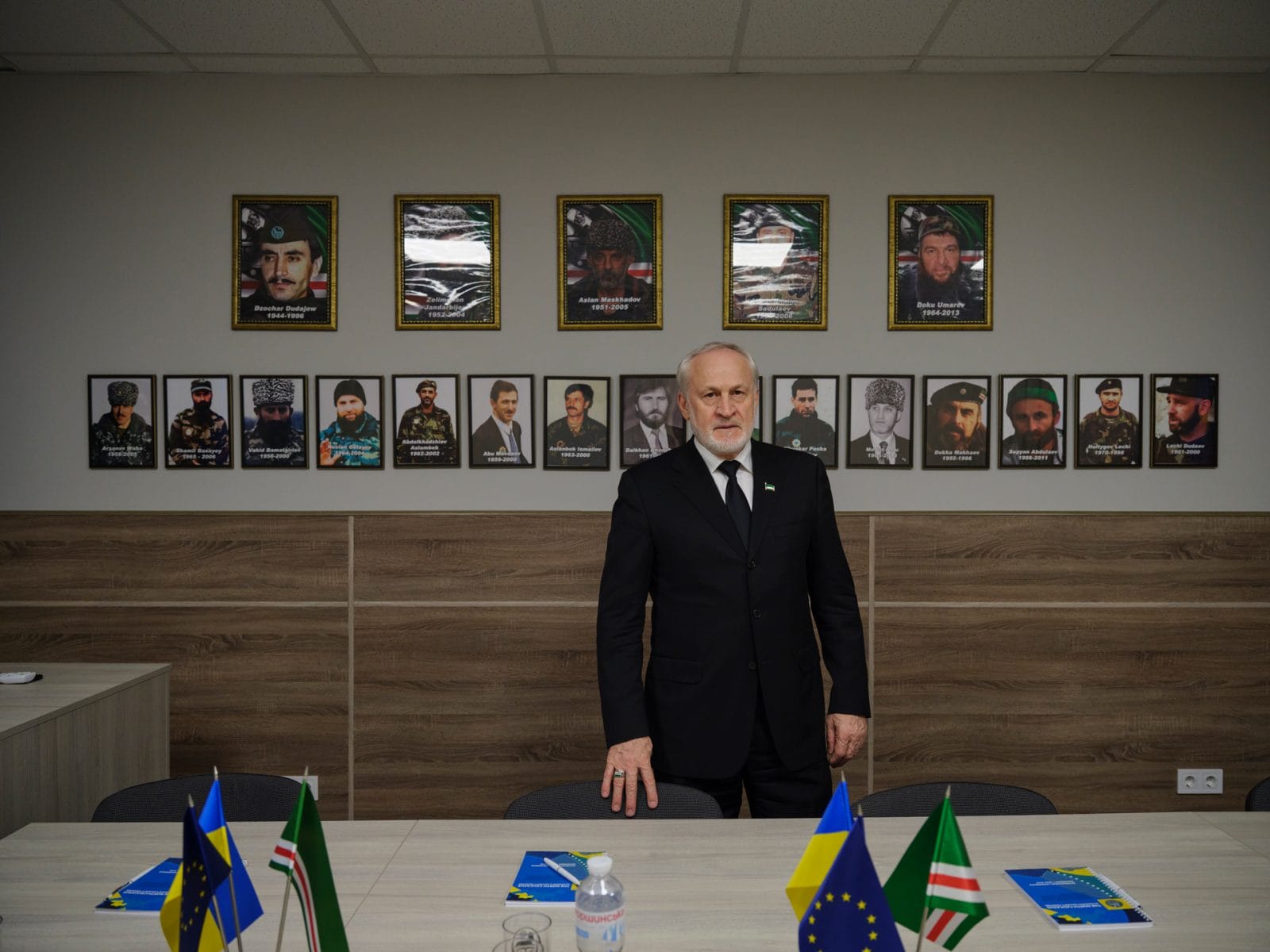
Photo: Óskar Hallgrímsson.
I was struck by the compassion Zakayev seemed to feel for Chechens still serving in the Russian armed forces. In Ukraine, it isn’t uncommon to refer to Russian troops as “orcs”. For Zakayev, there is no denying that Kadyrov’s troops are his kin. These soldiers “are the kids of the people who died fighting for Ichkerian independence. They are just under occupation, children who grew up under Russian bombs. They’ve been abandoned by the whole world.”
He doesn’t deny that Chechen units have committed war crimes. Ukrainian officials have pointed to the involvement of Chechen troops in the mass murders of civilians in Bucha. Zakayev stresses that they are an absolute minority. The Kremlin, he argues, has weaponized debased stereotypes of Chechens to distract from war crimes committed by ethnic Russians. Part of OBON’s mission, he says, in fighting alongside Ukrainians, is to change perceptions of Chechens as a people – and in doing so to bolster their claims to independence.
In Abu Dhabi, talks between representatives of Russia, the U.S. and Ukraine have made little headway. On November 19, a coalition of European nations gathered in Berlin to sketch out their own vision of an end to the war. A man like Zakayev might point out that great powers carving out spheres of influence, consolidating power over vassal states, and invisibilising their claims to self-determination, may seem par for the course — until it completely backfires.
Related Articles


It is difficult to talk, or even think, about Russia’s defeat without wondering what defeat might mean for the integrity of its statehood. Zakayev told me that when Russia is eventually beaten, it will be a catalyst for the disintegration of the Russian Federation. But, he adds, it’s also clear that Russian decolonization “must come from within, it cannot be forced upon them.” He is, he claims, “not advocating the destruction of the geopolitical landscape, nor the onset of chaos. This process must be a politically conscious one, driven by the Russians themselves.”
His ongoing struggle is a testament to the fact that people remain who contest colonization. However viable you may believe Zakayev and his battalion’s aspirations to be, they have served an essential purpose — for indigenous Russians, they have made clear the possibility of resistance.