






Crypto’s corrupt American dream

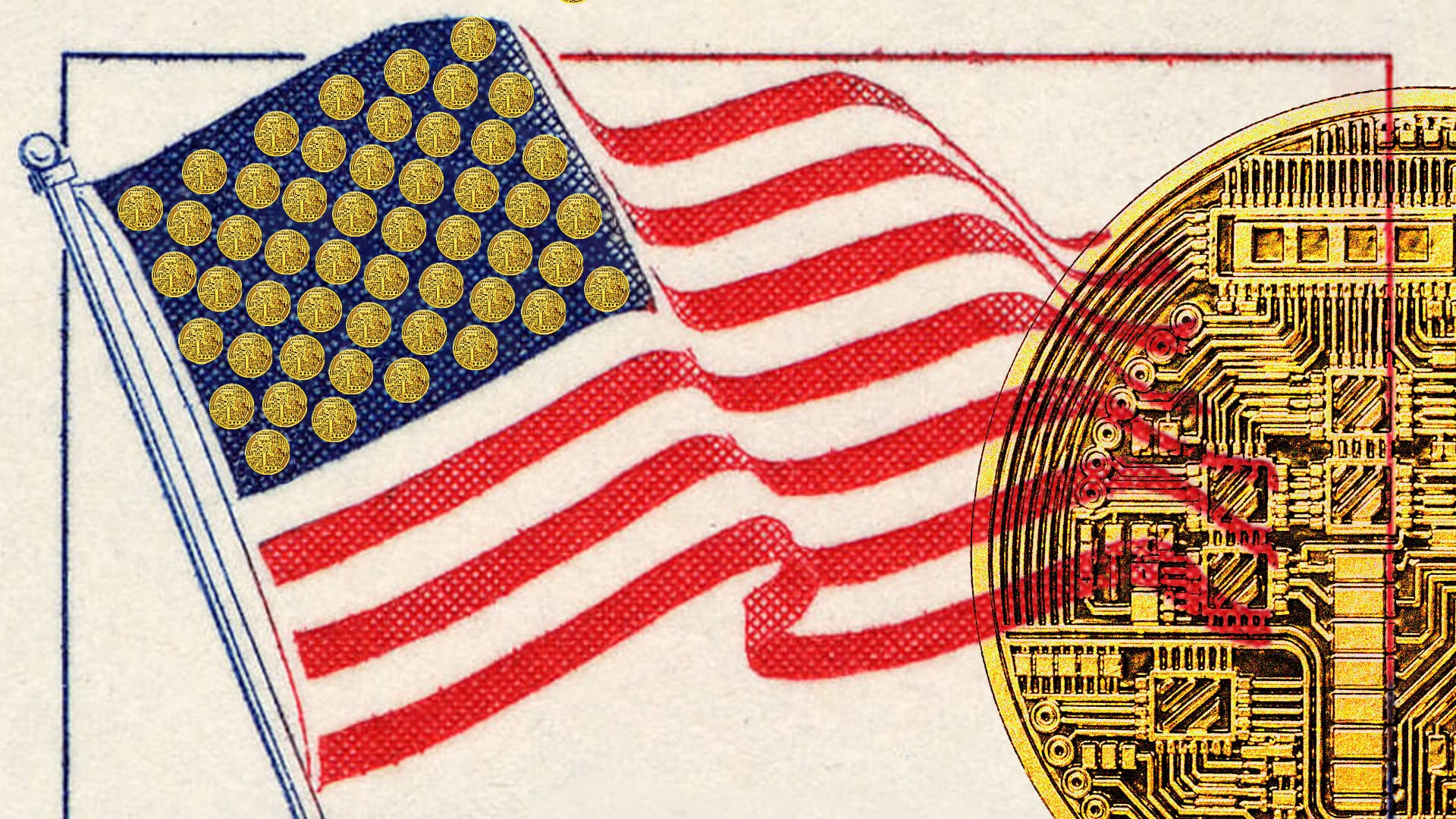
The United States is inching closer to passing a gigantic piece of legislation to put cryptocurrencies on a secure footing, with the bill emerging unscathed from the Senate’s banking committee. Opinions differ as to what this means: crypto people are thrilled, while anyone who knows about money laundering is terrified. Passage of the so-called CLARITY bill has been a key goal of crypto enthusiasts since Donald Trump came to power, since it would give them the legal certainty to engage in “financial innovation” without worrying about a return to the Biden-era policy of trying to regulate them as if they were normal people.

Subscribe to our Coda Currents newsletter
Insights from the Coda newsroom on the global forces that shape local crises.
Committee chairman Tim Scott is delighted: “For me, this is personal. My mother raised my brother and me with faith, grit, and determination, and she taught me that the American Dream should be within reach for every family, including single mothers working hard to build a better life for their children.”
I quote Scott partly because it’s such a weird justification for passing crypto regulation (or perhaps he just says that sort of thing about literally everything he ever does?), but mainly because it’s pretty clear that the bill as it stands will be a disaster for the kind of vulnerable people he claims to be fighting for.
In a sign of experts’ concerns, Transparency International’s U.S. office put out a statement quoting nearly all the most respected voices on money laundering in America arguing that the bill needs better safeguards against dirty money. “At a time when we know that hostile actors like (Iran’s Revolutionary Guards) are looking to circumvent U.S. sanctions to rearm and threaten Americans and U.S. interests around the world, it is inconceivable to me that we would open new, effective channels for sanctions evasion,” said Richard Nephew, former U.S. Coordinator on Global Anti-Corruption and Deputy Special Envoy for Iran.
“Terrorists, violent drug traffickers, and organized criminals who prey upon the elderly and unlearned in increasingly sophisticated financial and AI generated schemes are, quite literally, getting away with murder, funded by untraceable cryptocurrency transactions hidden behind an anonymous block chain,” said former FBI agent Karen Greenaway.
There is an awful lot of money in crypto, and Tether alone now has three people among the richest 100 in the world. Tether’s largest single shareholder Giancarlo Devasini’s wealth has grown from $9.2 billion in 2024 to $89.3 billion now, while chief executive Paolo Ardoino and former CEO Jean-Louis van der Velde have done pretty well too. Though none of them have done quite as well as Changpeng “Binance” Zhao, crypto’s only centibillionaire (so far).
In the UK, there’s a lot of concern about the millions of pounds going from crypto investors to Reform’s Nigel Farage, who has become a crypto champion, no doubt coincidentally. But, wow, look at what’s happening in Alabama for a sign of what the future looks like if crypto people really get their hands on the purse strings and try to buy their way into the Senate.
That much money doesn’t just help supporters win, it also terrifies opponents: standing up to the crypto lobby guarantees you’ll be swamped in hostile advertising. How do you want to be paid, as Pablo Escobar used to say, in silver or lead?
But why should the rest of the world care that this is happening? I’m sure I’m not the only foreigner who’s been staring in bewilderment at the growth of U.S. prediction markets, and how efficiently they allow insiders to monetise their privileged access to inside information. A lot of those markets are barred in other countries, but the U.S. soldier who was arrested for betting on the Maduro capture was trading on polymarket, a crypto-denominated market which is blocked in the United States too, despite Donald Trump Jr. being an investor.
Such restrictions can be easily bypassed by using a Virtual Private Network, so U.S. regulators are using artificial intelligence to track down insider trading on polymarket. After that soldier’s arrest, I suspect Americans will be much more careful about what they do.
Prediction markets claim they don’t want insiders trading on privileged information. But if the markets are to function in a way that supports their founders’ justification for them, as a price signal for future events, they rely on people with knowledge to be using them to make bets and thus to move prices in a useful direction. So clearly the temptation will always be there for anyone with inside information to use it to make some easy money.
Related Articles

And does anyone think U.S. regulators will care about Indians, Brits, South Africans Ukrainians, or other foreigners using crypto to trade on information from their own countries? They after all have a track record of treating foreigners and U.S. citizens differently. That’s why it was Francesca Albanese, with her American husband and daughter, who managed to have sanctions cancelled for daring to investigate Israel’s behaviour in Gaza, whereas non-U.S. connected people have failed to do so.
The new U.S. crypto bill coupled with U.S.-based crypto-denominated prediction markets points towards the United States becoming a gigantic offshore enabler of corruption for the rest of the world; a digital version of what Switzerland was in the analogue years, with everyone else reduced to begging its regulators for assistance.
“Crypto prediction markets are accessible to anyone with an internet connection and a wallet, pooling liquidity from a global user base rather than a regional one,” says Chainalysis. I think they mean that to be a good thing, because the blockchain is transparent and malefactors can be spotted easily yada yada, but it sounds beyond dystopian to me. I’m genuinely a bit terrified of what this will mean for corruption in the next few years, and I haven’t heard of any politicians who are alert to it yet.
A version of this story was published in this week’s Oligarchy newsletter. Sign up here.