

When the United States and Israel started blitzing Iran last weekend, eyes turned to the Chagos Islands in the Indian Ocean. The British-administered archipelago is home to a strategically vital US air base on the island of Diego Garcia. Would US President Donald Trump be using it in his “Operation Epic Fury”?
It’s fair to say Trump probably didn’t give a damn about Misley Mandarin’s opinion. But the self-styled “interim first minister” of Chagos, who recently upped sticks from Britain in a “super, super secret” mission to take up residence on the long-deserted Peros Banhos atoll, gave Washington his official “blessing” anyway.
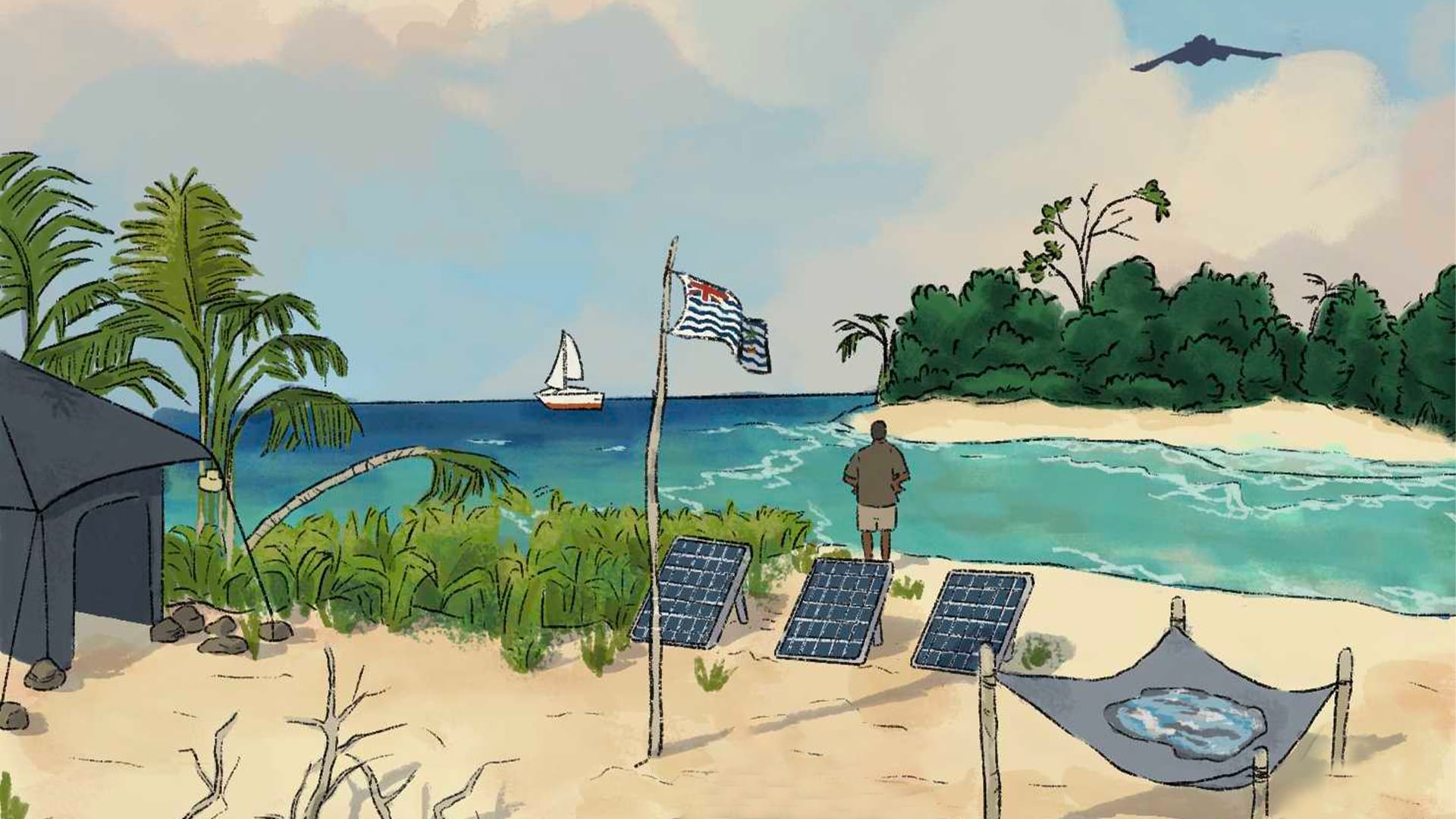
I spoke via WhatsApp to the 47-year-old Chagossian in his base camp: basically a few tents, with a solar generator and a Starlink satellite connection enabling him to beam reels to his 10,000 Facebook followers. He quit his job as a bus driver in London to come here, determined to halt Britain’s plan to hand over what he considers to be his land to Mauritius after a long-running decolonization battle.
“We’re British citizens here. We’re not moving,” he said.
Mandarin wants the land of his forebears to remain under the rule of Britain, the former colonial ruler that booted out about 1,500 native Chagossians, including his own father, to make room for the U.S. military base in the late 1960s. The removal consigned Chagossians to a miserable fate in newly independent Mauritius.
Now on home turf, Mandarin, his 72-year-old dad, and two other Chagossians have dodged immediate deportation: they’ve obtained an injunction from a British court allowing them to stay until a hearing on March 13. Since their arrival, two more Chagossians have joined them. “We can do self-determination right now. We don’t want to cut any links with Britain. We’re not looking for independence,” Mandarin says.
“The next generation will decide on independence.”
Marriage of convenience
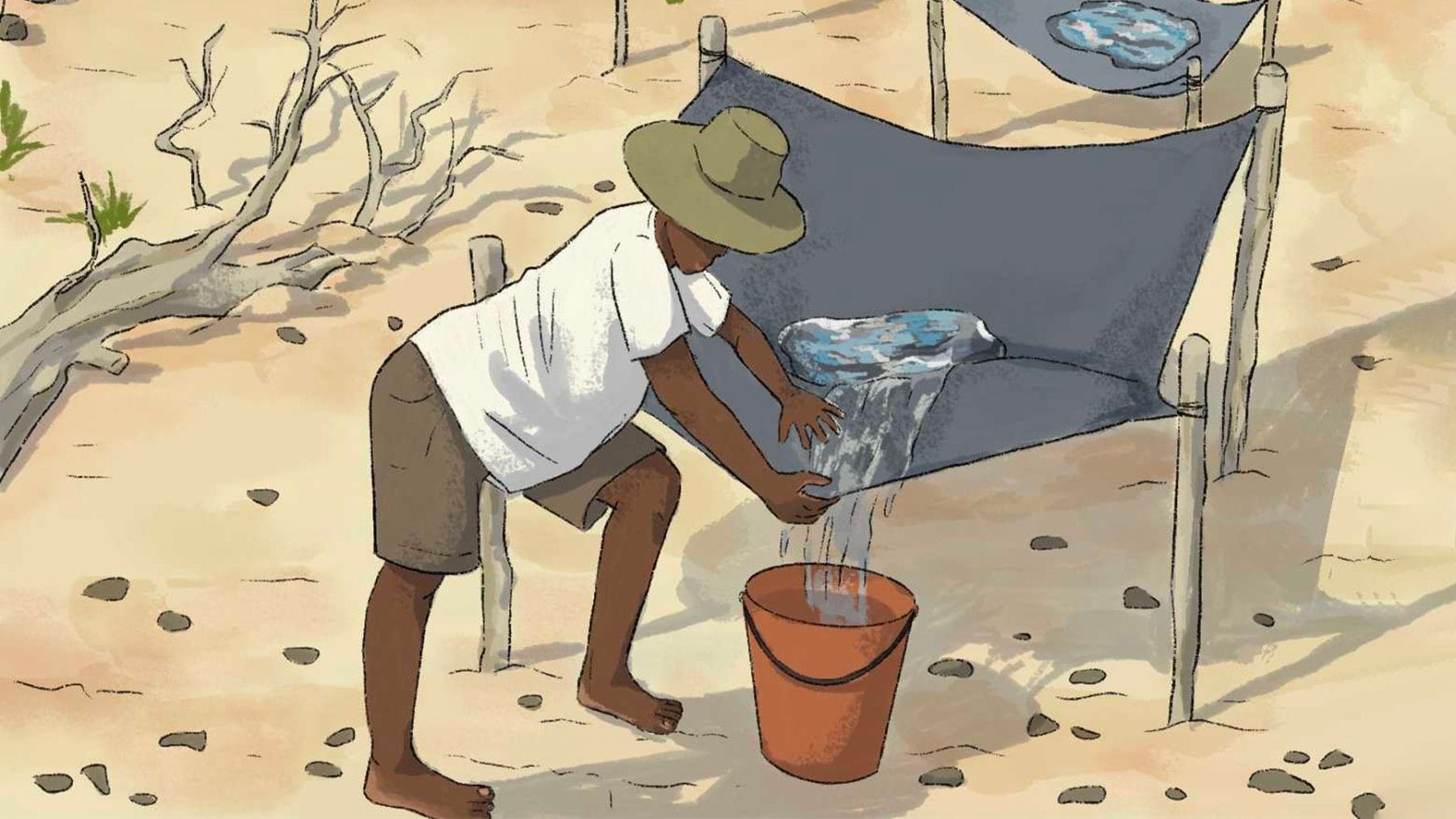
Life on Île du Coin, the largest island on Peros Banhos, is simple. The daily routine revolves around catching fish and finding a supply of fresh water. The new residents collect overnight rainfall in tarpaulin sheets to drink. Bathing involves a dip in the sea to wash off dirt, followed by a splash of precious rainwater to rinse.
Mandarin appears to be relishing the experience. Soon after his arrival, the former army cook, who has bags of swagger, posted a video of himself cooking up “naan fromaaz”, or cheese naan, in a skillet on a makeshift stove. “Pa bizin madam isi mwa!” he jokes. I don’t need a wife here!
The Chagossians arrived on the island on 16 February, accompanied by former army officer Adam Holloway, a former Conservative MP who recently defected to the radical right Reform UK party.
Reform, which is surging in the polls, is leading opposition to a bilateral treaty that would see Britain cede sovereignty of Chagos to Mauritius, while paying an average of £101-million ($135-million) per year to maintain a lease on Diego Garcia over the coming century. Negotiations began after the International Court of Justice ruled in 2019 that Britain should transfer sovereignty of Chagos to Mauritius “as rapidly as possible.”
The sleek yacht that brought the group on the five-day journey from Sri Lanka and travels back and forth with supplies was paid for by British-Thai businessman Christopher Harborne, a mega-donor to Reform. Its name is No Excuse – as in, “no excuse for us not to stay on Chagos,” says Mandarin.
Reform UK and the Chagossians make for curious bedfellows. On the one hand, there’s a political party that has floated plans to create a Trump-inspired, ICE-style agency to carry out mass deportations in Britain.
On the other, there’s Mandarin’s dad, finally back home after being brutally evicted from his atoll at the age of 14. “I will not go back to England. I want to die here,” said Michel Mandarin, as he set foot on his cherished Chagossian soil.
The unlikely pairing has had cause for joint celebration. Two days after they arrived, Trump withdrew his approval for the UK-Mauritius transfer treaty, which was supposed to provide legal certainty for the base in a hypothetical world governed by the rules-based international order.
It turned out the president was annoyed at British Prime Minister Keir Starmer’s refusal to sanction the use of Diego Garcia for the Iran offensive. “DO NOT GIVE AWAY DIEGO GARCIA!” he told the British prime minister. The treaty was paused. Then war broke out and a beleaguered Starmer agreed to “defensive” strikes from Diego Garcia.
On Île du Coin, war seems like a distant prospect, even if it is potentially less than 200km (about 125 miles) away in Diego Garcia. As Tuesday drew to a close, there had so far been neither sight nor sound of the US’s deadly B-52, B-1, and B-2 bombers in the slightly overcast skies.
Kicking the can
Mandarin left Mauritius at age 22. He joined the British army in a bid to improve his lot and later became a bus driver in south London. He says he always felt like a second-class citizen in Mauritius, with “no opportunity to progress”.
Rights groups have charted how evictees from Chagos struggled to cope in Mauritius, many of them ending up trapped in an urban nightmare of poverty, mental illness, and addiction — with little sympathy from their hosts. Many Chagossians left for Britain after securing citizenship rights.
Now the fate of their homeland is being decided by a treaty negotiated over their heads. Last year, a UN committee on racial discrimination warned that the treaty could perpetuate “long-standing violations” of Chagossian rights.
The treaty says Mauritius is “free” to resettle islanders on any of the Chagos islands — except Diego Garcia. But there is no binding obligation for it to do so and the exclusion of Diego Garcia rankles. The deal also includes a £40-million trust fund to be managed by Mauritius, which has been criticised as a ruse by Britain to avoid paying proper compensation.
“People talk about decolonisation, but if Britain did the wrongs, Britain should have to repair the wrongs — not kick the can to Mauritius,” says Mandarin. “Or they will get away with it.”
One of the reels he has filmed on Île du Coin features an industrial oven that was used by colonial officials to burn the islanders’ dogs before they were evicted. Officials threatened the islanders with the same fate if they refused to leave. Britain must pay compensation, he says.
‘Belongers’
Mandarin’s joint odyssey with Reform UK has provoked mixed feelings among the Chagossian diaspora in Britain, Seychelles, and Mauritius.
“He’s put us back in the centre of the story, but will we be overshadowed by Reform’s agenda?” asked one Chagossian in the English town of Crawley – home to a 3,500-strong Chagossian community — who is also opposed to the deal.
As the treaty was being negotiated, Chagossians’ concerns were largely swept under the carpet as a complicating factor in a pragmatic decolonization drive.
The hard right has capitalized on the deal’s major flaw, positioning itself as the main champion of Chagossians, just as their ancestral land finds itself embroiled in a conflict that could upend the global order.
Related Articles


One video recently posted by Reform leader Nigel Farage saw him express outrage after being “denied access” to Île du Coin for the delivery of “humanitarian” supplies to Mandarin and his men, racking up a cool 4.7 million views on X.
Asked whether he is being used by Reform and its supporters, Mandarin is sanguine. He says he also contacted the left-wing Green Party for support, but it never replied. “Only Reform responded. At the end of the day, it’s politics. You have to make your own judgements for the sake of your people,” he says.
He views the upcoming hearing as a potential “turning point in our fight”. The injunction barring their removal was granted on the basis that their location was too far from the base to pose a security threat. “If the court says they can’t remove us, then maybe more people will come,” he says. “This is our people. This is our time. We’re not visitors — we’re belongers.”